How to Find Affordable College Housing Off Campus
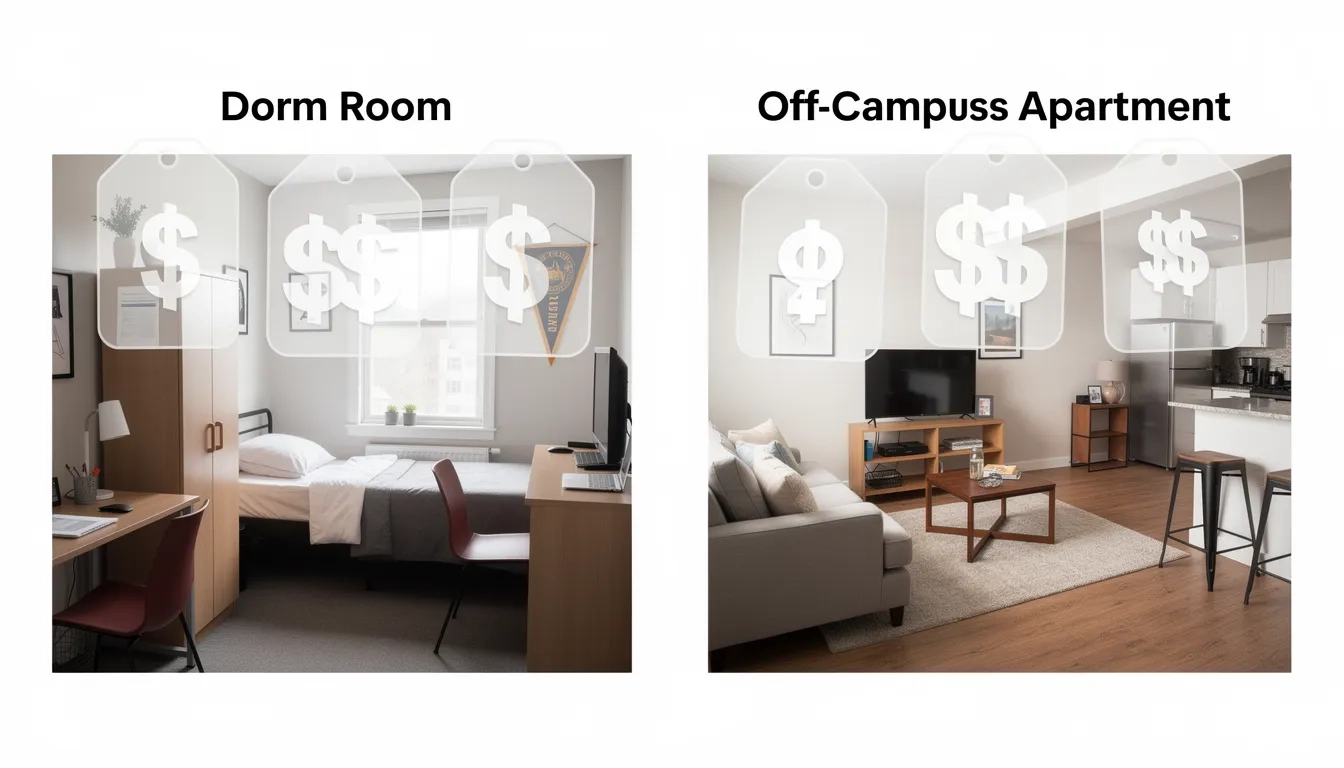
At public four-year universities in 2022-23, the average student spent more on room and board than on tuition and fees. Read that again. The roof over their heads cost more than the education itself, and that gap has kept widening. If you're hunting for off-campus housing and feeling the squeeze, you're not overreacting — the numbers really are that bad.
But off-campus housing done right can cut your annual costs nearly in half. Done wrong, it can cost more than the dorm you were trying to escape.
The Real Math Before You Sign Anything
The average on-campus room and board at a four-year college now runs $14,398 for the 2025-26 academic year, according to the Education Data Initiative's 2026 analysis. Spread over nine months, that's nearly $1,600 a month, and most packages bundle in a mandatory meal plan you may not use fully.
Off-campus housing tells a different story, but only if you play it right. Students sharing an apartment three ways average about $7,020 annually — less than half the on-campus price. Go it alone in a solo studio, and you'll likely spend more than the dorm.
One more number worth knowing: 48% of college students experience housing insecurity at some point, per a StarRez survey from 2025. That's not a niche problem. Starting with a real budget changes your outcome more than anything else on this list.
When to Start Looking (And Where)
Start searching 6 to 9 months before your move-in date. In tight markets like Provo, Utah or Tempe, Arizona, landlords near university campuses fill units a full year out. Most students begin in March for a September move — roughly right for a mid-size college town, and already late for the most competitive spots.
Here's where to actually look:
- Zillow and Apartments.com — broad inventory with filters for price, bedrooms, and distance from campus
- Facebook Marketplace and local housing groups — best for off-market sublets and month-to-month deals, often negotiable
- RentCollegePads.com and FindMyPlace — built specifically for student rentals, with campus-proximity filters and roommate matching built in
- Bunky — now covering 700+ campus communities with over 120,000 students as of 2026; good for finding both housing and pre-matched roommates
- Your university's off-campus housing board — frequently overlooked, but often lists landlords who specifically want student tenants
Set up saved searches with email alerts on Zillow and Apartments.com. You want to know when something new hits the market, not browse the same stale inventory every Sunday afternoon.
The Roommate Equation
This is where the math gets genuinely interesting. Consider a 4-bedroom apartment priced at $1,600 total per month. Split three ways (one person shares a bedroom), each person pays roughly $400. That's $4,800 for a full 10-month school year.
Compared to $14,398 for on-campus housing, the difference is $9,598. Not a rounding error.
Here's what the cost curve looks like across different living arrangements:
| Setup | Monthly cost per person |
|---|---|
| Shared bedroom in 4BR apartment | $300 – $500 |
| Private room, 3+ roommates | $450 – $800 |
| Private room, 1 roommate | $700 – $1,200 |
| Solo studio or 1BR | $900 – $2,500+ |
The most common mistake: searching for apartments before locking in roommates. You'll either overpay for a solo unit or sign a lease hoping to fill rooms later — a situation that almost never goes smoothly. Find your people first, then find the place.
For finding roommates, your university's Facebook housing group is the fastest option. Apps like Roomi and Bunky let you filter by sleep schedule, cleanliness habits, and guest policies before you ever meet. The right question to ask isn't "are you clean?" — it's "do you have people over on weeknights?" One of those questions has an honest answer.
The Distance Play
Rental prices consistently peak within a half-mile to one mile of campus. That location premium can run $150 to $300 per person per month compared to apartments just 1.5 miles away. In a city with decent bus service or bike-friendly streets, that distance is mostly irrelevant.
Run the actual math before dismissing farther options. A $200/month savings on rent saves $2,400 annually. A student bus pass in most college cities costs under $600 a year — and many universities include transit passes in student fees automatically. You'd still come out $1,800 ahead, before accounting for campus parking permits that often cost another $400 to $1,200 per year.
The honest counter-argument: some students lose time that has real value. A 37-minute daily commute each way, sustained across a full academic semester, adds up to roughly 55 hours you're not studying or sleeping. Factor that in if you're carrying a heavy courseload or working part-time.
Hidden Costs Nobody Tells You About
The advertised rent is rarely the real rent. Before signing anything, ask for a written estimate of average monthly utilities — landlords in many states are required to provide this, and most will give you a reasonable ballpark if you ask directly.
Here's what typically gets added to base rent:
- Utilities (electricity, gas, water): $85 – $200/month, higher in poorly insulated older buildings
- Internet: $30 – $60/month unless the building includes it
- Renter's insurance: $15 – $30/month, required by most landlords (and worth having anyway)
- Parking: $50 – $150/month if you have a car and no dedicated spot
- Furniture: $500 – $1,500 upfront for your first year moving in
The 12-month lease problem deserves specific attention. Many landlords near universities offer only 12-month leases, but your school year runs 9 months. That means three summer months of rent you need to account for, either by staying, subletting (if your lease allows it), or absorbing the cost. Before signing, ask whether a 9 or 10-month lease is available. Some landlords in college towns will negotiate this, especially if you're a reliable applicant with a co-signer.
How Financial Aid Applies Off Campus
Good news first: federal financial aid covers off-campus housing. Pell Grants, subsidized loans, and most scholarships can be applied toward off-campus rent and utilities. Your school's cost of attendance calculation includes a housing allowance specifically for students who live off campus — ask your financial aid office for the exact figure at your school.
The housing allowance in most financial aid packages reflects a modest local rent estimate. If your actual rent runs higher, student loans can fill the gap — but that's real debt attached to a real interest rate.
There's a timing issue most students don't encounter until their first month. Rent is due on the first. Financial aid refunds typically land 10 to 14 days after the semester starts. That's a two-to-four week gap where you need cash in hand. Build a one-month buffer before your lease begins, whether from savings, family support, or a brief arrangement with your landlord.
One underused option: 529 college savings plan withdrawals qualify for off-campus room and board expenses, up to your school's official cost of attendance housing allowance. If your family has a 529, this is worth a direct conversation before defaulting to loans for your housing costs.
Moves Most Students Don't Think to Make
Becoming a Resident Advisor (RA) eliminates your housing cost entirely at most universities. You get a private room, often with a meal plan, in exchange for supporting students in a residence hall. Expect 10 to 15 hours of real work per week. For the right person, it's the highest-value housing arrangement available anywhere on or off campus.
Subleases are another consistently overlooked option. When a graduate student leaves mid-year or an undergraduate studies abroad for a semester, they need someone to take over their lease fast. You skip the deposit scramble, sometimes negotiate the rate down, and occasionally inherit a furnished unit. Your university's off-campus housing board and local Facebook groups surface these — but they move quickly, so set up notifications.
Negotiating with landlords is also worth attempting, especially in late spring when units that didn't rent in the fall rush sit empty. A landlord with a vacant apartment in June has genuine motivation to deal. Offering a 14-month lease (locking in the next fall slot), a slightly larger security deposit, or automatic bank-drafted payments in exchange for lower monthly rent can work. They won't always say yes. But asking costs nothing.
Finally, don't overlook renting a room from a private homeowner near campus. Some older homeowners near universities rent spare bedrooms well below market rate in exchange for reliable, low-drama tenants. Craigslist, Facebook, and physical flyers at local coffee shops surface these. The social setup is different from living with peers, but the rent can be shockingly reasonable.
Bottom Line
Off-campus housing can cost dramatically less than a dorm — or more, depending on how you approach the search. Here's what actually moves the needle:
- Lock in roommates before searching for apartments. The number of people splitting rent is the single biggest variable in your monthly cost.
- Start looking 6 to 9 months out, especially in competitive college towns. The best units disappear fast.
- Calculate the real monthly cost before making any comparison: base rent plus utilities, internet, parking, and renter's insurance rarely equals the number on the listing.
- Ask your financial aid office exactly what your off-campus housing allowance is, then search for units that fit within it.
- Explore subleases, RA positions, and negotiating lease terms before settling for whatever happens to be available. The best deals almost never appear in the first page of search results.
Frequently Asked Questions
Is off-campus housing always cheaper than a dorm?
Not automatically. Off-campus housing with two or more roommates usually beats on-campus pricing in most markets. But a solo off-campus apartment in a high-cost city can exceed dorm costs once you add utilities, furniture, and three extra months of a 12-month lease. The math only works clearly in your favor when roommates are part of the plan.
What's the best time of year to find a good off-campus deal?
Late spring, April through June, is often better than people expect. Units that didn't fill during the fall leasing rush sit empty, and landlords have more flexibility to negotiate. Fall — July and August especially — is when competition peaks and prices hold firm. If you can tolerate searching during finals season, you may find better deals.
Can I use my financial aid for off-campus rent?
Yes. Federal financial aid, including Pell Grants and student loans, can cover off-campus housing up to your school's cost of attendance housing allowance. Aid disbursed above your tuition charges comes back to you as a refund, which you can apply directly to rent. Just account for the 10 to 14-day gap between semester start and when refunds actually arrive.
Is the "more roommates = cheaper" rule always true?
Mostly, with one real caveat: a compatibility failure mid-lease is expensive. A roommate who stops paying, or a living situation that forces you to break your lease early, can wipe out months of savings in lost deposits and fees. Roommate vetting isn't optional — it's part of the cost calculation, not separate from it.
How do I rent an apartment with no rental history?
Offer a co-signer (typically a parent or guardian), a larger upfront deposit, or automatic bank-drafted payments. Landlords prioritize payment reliability above almost everything else. Some will also respond positively to a slightly longer lease commitment if you can demonstrate stable enrollment for that period.
What if I can't afford first month, last month, and deposit all at once?
Ask whether the landlord will waive last month's rent in exchange for a longer lease term. Look for sublets, which typically require little or no deposit since the original tenant already paid. Also know your state's rules: California, for example, caps security deposits at two months' rent for unfurnished units, so the legal ceiling may be lower than what a landlord initially requests.
Sources
- Off-Campus Student Housing Costs in 2026 | Find My Place
- College Housing Costs 2026: Dorm vs Apartment vs Commuting | DegreeCalc
- Average Cost of Room & Board for College | Education Data Initiative
- How To Afford an Apartment in College | BECU
- 8 Best Apps to Find a College Roommate in 2026 | Find My Place
- Does Financial Aid Cover My College Housing Costs in 2026? | Credible