Best Colleges in Hawaii 2026: Rankings, Programs, and Costs
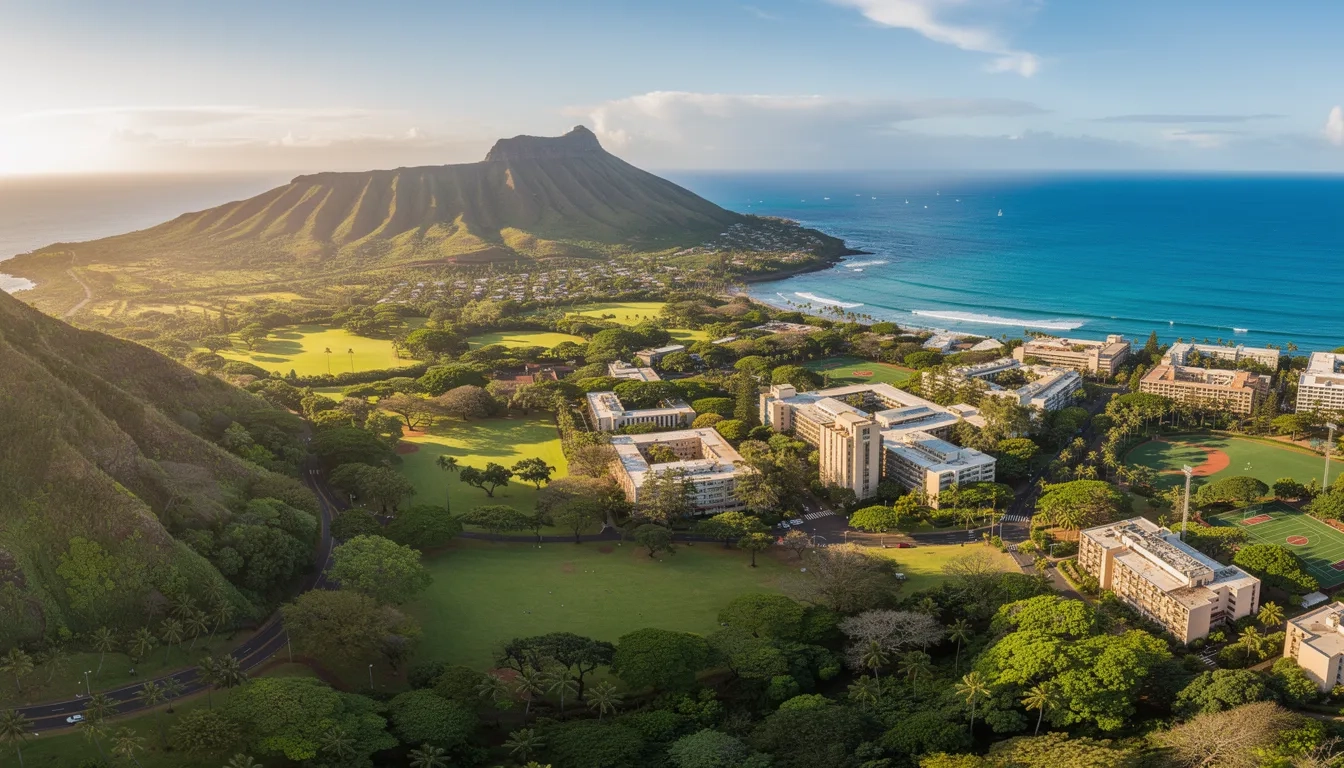
Picking a college in Hawaii sounds like a dream — sun, ocean, some of the most biodiverse research environments on earth — but the choice is trickier than the postcard suggests. The University of Hawaiʻi system alone spans three distinct four-year campuses, each with a very different mission and price tag. Add three notable private institutions, and you're looking at six serious options that serve completely different students. This guide breaks all of them down using the actual 2026 data, not marketing copy.
The Rankings Landscape: What the Numbers Actually Say
Before getting into individual schools, it's worth understanding that Hawaii's colleges get evaluated in two separate buckets by U.S. News: national universities (research-focused, doctoral programs) and regional colleges in the West (teaching-focused, fewer graduate programs). Comparing a regional school's rank to a national university's rank is like comparing apples to surfboards.
UH Mānoa and UH Hilo compete in the national universities category. UH West Oʻahu, Chaminade, and Hawaii Pacific compete as regional colleges. BYU-Hawaii operates in the regional colleges tier too. Keep that framing handy — it explains a lot of the apparent rank gaps.
UH Mānoa: The Flagship That's Moving Up
UH Mānoa is the clear anchor of Hawaii's higher education scene. In the 2026 U.S. News rankings, it landed No. 92 among public universities nationally and No. 169 overall — a research university that punches well above its tropical-campus reputation.
The Wall Street Journal's College Pulse 2026 rankings told an even more striking story. Mānoa climbed 62 spots to No. 240 nationally, landing at No. 97 among public universities. That kind of jump in a single year doesn't happen by accident — the WSJ methodology weights student outcomes and diversity heavily, and Mānoa scores an 84 on diversity. Its average net price of $13,181 and a debt payoff timeline of roughly 1 year and 8 months make it unusually affordable for a research university of its caliber.
The program-level rankings are where Mānoa gets interesting. William S. Richardson School of Law ranks No. 18 nationally in environmental law — fitting for the only state that sits in the middle of the Pacific. The School of Ocean and Earth Science and Technology ranks No. 40 in earth sciences. If you're drawn to ocean science, climate research, or environmental policy, no school in America places you in a more relevant setting.
"Students who want oceanography, climate science, or Pacific Island studies don't just benefit from UH Mānoa's programs — they benefit from being on an island surrounded by the subject matter."
Tuition: $12,186 in-state, $34,218 out-of-state. Acceptance rate: 70%.
UH Hilo and UH West Oʻahu: Underrated Options
These two campuses don't get the same attention as Mānoa, but they serve distinct purposes and deserve a harder look.
UH Hilo, on the Big Island, ranked No. 178 among public universities nationally in 2026. It's smaller, more intimate, and notably strong in pharmacy — the Daniel K. Inouye College of Pharmacy ranked No. 92 nationally in graduate programs. If you want a Big Island lifestyle (and research access to Maunakea, one of the world's premier astronomical observing sites), Hilo is genuinely special. At $7,838 in-state tuition and a 90% acceptance rate, it's one of the most accessible research university campuses in the country.
UH West Oʻahu tells a different story. It's a commuter-friendly campus on the west side of Oahu, focused on working adults and first-generation students. In 2026, it ranked No. 3 among public colleges in the West in the regional college category and No. 3 for veterans — up five spots from two years prior. At $7,584 in-state tuition and a 96% acceptance rate, it's the most open-access four-year option in the system.
| Campus | US News 2026 Rank | In-State Tuition | Acceptance Rate | Best For |
|---|---|---|---|---|
| UH Mānoa | #92 public (national) | $12,186 | 70% | Research, law, ocean science |
| UH Hilo | #178 public (national) | $7,838 | 90% | Pharmacy, astronomy access |
| UH West Oʻahu | #3 public West (regional) | $7,584 | 96% | Working adults, veterans |
BYU–Hawaii: The Most Selective Private Option
Brigham Young University–Hawaii sits on the North Shore of Oahu in Laie, and it's genuinely unlike any other campus in the state. Operated by The Church of Jesus Christ of Latter-day Saints, it's the most selective private college in Hawaii with an acceptance rate of 38%. (That's tighter than UH Mānoa.)
Tuition is $6,630 per year, the lowest published rate of any four-year college in Hawaii — even cheaper than the UH public campuses. That figure applies to both in-state and out-of-state students. The catch: the school strongly prioritizes applicants who are members of the LDS faith, and students are expected to follow the BYU-wide Honor Code.
The campus draws heavily from Pacific Rim countries (Japan, South Korea, Tonga, Samoa), which creates an unusually international student body for a small liberal arts institution. If cultural diversity and a faith-centered environment align with your values, BYU–Hawaii offers extraordinary value per dollar.
Chaminade and Hawaii Pacific: The Honolulu Private Schools
Both of these institutions sit in or near downtown Honolulu and cater to different student profiles.
Chaminade University of Honolulu is Hawaii's only Marianist institution, founded in 1955, and it punches above its size in the rankings. In the 2026 U.S. News regional colleges West tier, it ranked No. 38 overall and No. 23 for Best Value Schools. That Best Value distinction matters: 100% of undergraduates receive some form of financial aid, with an average award package of $14,216. Published tuition is $30,874, but very few students pay that.
Chaminade is also one of the most diverse campuses in the country (76% of students come from ethnically diverse backgrounds) and serves a large first-generation population — 51% of undergrads are the first in their family to attend college. The campus covers 65 acres in the Kaimuki neighborhood of Honolulu and has about 1,583 undergraduates, which means small classes and real faculty access.
Hawaii Pacific University is larger and more urban, sitting near downtown Honolulu. It ranked No. 86 in regional colleges West in 2026. Published tuition runs $34,392, the highest sticker price of any Hawaii college — but HPU offers the most grant aid of any school in the state, averaging $16,417 per student. HPU leans into its location with strong business, nursing, and oceanography programs, and its downtown campus puts students within walking distance of Hawaii's financial and tourism industry employers.
| School | US News 2026 | Published Tuition | Avg Grant Aid | Acceptance Rate |
|---|---|---|---|---|
| Chaminade | #38 Regional West | $30,874 | $14,216 (avg pkg) | 93% |
| Hawaii Pacific | #86 Regional West | $34,392 | $16,417 | 84% |
| BYU–Hawaii | Not ranked (regional) | $6,630 | LDS-funded | 38% |
Program Rankings That Should Drive Your Decision
Rankings are useful for first-pass filtering. But if you know your intended field, the program-level data matters far more than the overall rank. Here's where Hawaii schools genuinely shine:
- Environmental law: UH Mānoa (#18 nationally) — one of the top programs in the country
- International business: UH Mānoa Shidler College of Business (#22 grad)
- Pharmacy: UH Hilo Daniel K. Inouye College of Pharmacy (#92 grad)
- Nursing: UH Mānoa School of Nursing (#118 undergrad, #55 master's)
- Earth/ocean sciences: UH Mānoa (#40 grad)
- Education: UH Mānoa College of Education (#57 grad)
- Veterans programs: UH West Oʻahu (#3 in the West)
The WSJ 2026 data also flagged that UH Mānoa adds $31,504 in value to graduate salaries relative to expected earnings — a metric that accounts for student demographics. For a public university, that's a strong signal of real economic return.
How to Pick the Right Hawaii College
The honest answer is that the "best" school depends almost entirely on your circumstances. Here's a simple framework:
If you're an in-state student focused on research or graduate school prep: UH Mānoa. The combination of a nationally ranked research institution with $12,186 annual tuition is hard to beat. Start applications in the fall of your senior year; Mānoa's honors program has separate deadlines.
If you want the lowest possible cost and don't need a major research campus: BYU–Hawaii (if you meet the admissions criteria) or UH West Oʻahu. Both come in under $8,000 in-state annually. UH West Oʻahu's near-100% acceptance rate also makes it a reliable safety or transfer option.
If pharmacy or Big Island life appeals to you: UH Hilo. The pharmacy program has a strong regional reputation, and the campus culture is noticeably more laid-back than Honolulu campuses. Out-of-state students should factor in the $20,798 tuition before committing.
If you're a first-generation or non-traditional student who needs real financial aid transparency: Chaminade is the standout. The fact that 100% of students get aid — and that Chaminade ranked No. 23 for Best Value in its tier — suggests the school is genuinely committed to keeping costs manageable. Do the math on your actual net price before ruling out any private school.
If you're a working professional or want an urban campus with industry access: Hawaii Pacific. The downtown Honolulu location puts you near hospitality, healthcare, and government employers, and HPU's evening and online options are designed around working adults.
Bottom Line
- UH Mānoa is the best all-around choice for most students, especially residents who qualify for in-state rates. It climbed 62 spots in the 2026 WSJ rankings and carries 10 graduate programs in the national top 50.
- Don't sleep on UH West Oʻahu and UH Hilo — they offer exceptional value and are climbing in social mobility rankings year over year.
- Private schools in Hawaii aren't automatically unaffordable. Chaminade's 100% financial aid participation rate and Best Value ranking make it worth running your actual net price calculator before writing it off.
- Match the school to your field. If you're serious about ocean science, environmental law, or Pacific Studies, UH Mānoa puts you closer to the research than almost any mainland program can.
- Students who start comparing financial aid award letters — not just published tuition — in the spring of their junior year give themselves the most room to make a financially sound decision.
Frequently Asked Questions
Is the University of Hawaii at Manoa a good school nationally?
Yes, and it's improving. In the 2026 U.S. News rankings, UH Mānoa placed No. 92 among public universities nationally and No. 169 overall. In the WSJ/College Pulse 2026 rankings, it climbed 62 spots in a single year to No. 240. For specific fields like environmental law and ocean science, it ranks in the national top 20.
What is the cheapest college in Hawaii?
Brigham Young University–Hawaii has the lowest published tuition at $6,630 per year, lower even than UH public campuses. However, BYU–Hawaii strongly prioritizes LDS applicants and has a 38% acceptance rate. Among open-access public options, UH West Oʻahu charges $7,584 in-state — the most affordable public four-year option with a 96% acceptance rate.
Are private colleges in Hawaii worth it compared to the UH system?
It depends on your net price, not the sticker price. Chaminade University, for example, publishes tuition of $30,874 but provides financial aid to 100% of students — the average award package is $14,216. Hawaii Pacific offers the highest average grant aid in the state at $16,417. Always run the net price calculator on each school's website before comparing costs.
Is it hard to get into the University of Hawaii?
Not particularly. UH Mānoa's acceptance rate is about 70%, UH Hilo's is 90%, and UH West Oʻahu accepts about 96% of applicants. BYU–Hawaii is the most selective institution in the state at 38%, despite having the lowest tuition.
Which Hawaii college is best for healthcare programs?
UH Mānoa's School of Nursing and Dental Hygiene ranks No. 118 nationally for undergraduate nursing and No. 55 for master's programs. UH Hilo's Daniel K. Inouye College of Pharmacy ranks No. 92 in graduate pharmacy. The John A. Burns School of Medicine at UH Mānoa also ranks No. 42 nationally for graduates practicing in rural areas — particularly relevant given Hawaii's geographic and rural healthcare challenges.
Do Hawaii colleges serve a lot of first-generation students?
Yes — this is one of the most underappreciated aspects of Hawaii's higher education landscape. Chaminade reports that 51% of its undergraduates are first-generation college students. UH West Oʻahu's social mobility ranking has climbed 13 spots over two years in the U.S. News data, reflecting its strong track record of serving students who wouldn't otherwise access four-year degrees. The UH system broadly prioritizes affordability and access in ways that many mainland flagship universities don't.