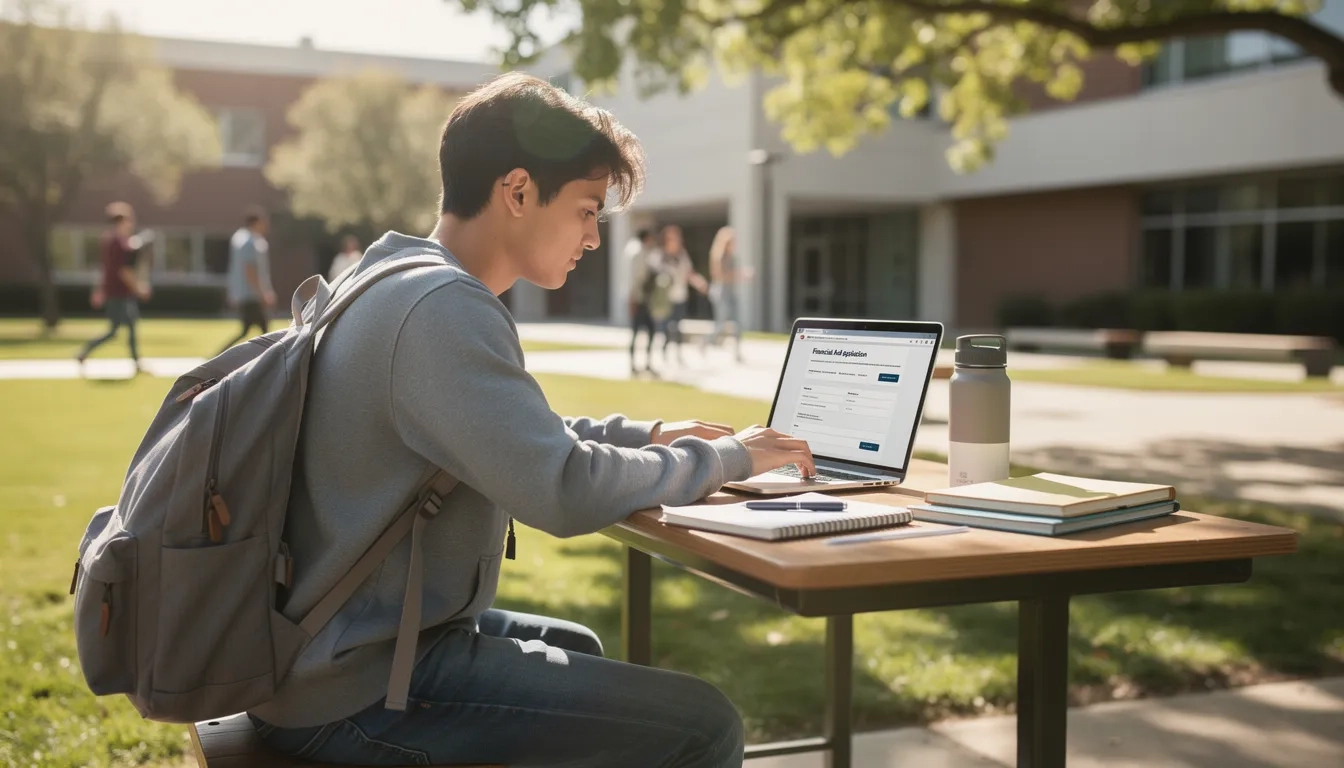
College Safety Guide: How to Stay Safe on Campus

Most students arrive on campus thinking the biggest adjustment is managing their own schedule for the first time. What they don't expect: the first 12 weeks of freshman year carry a disproportionate share of the year's most serious incidents, and most campus orientations gloss over the specific patterns that actually matter. The data exists. You just have to know where to look — and what to do with it.
The Risk Landscape You Actually Face
Campus security professionals have a name for the August-through-November stretch: the "Red Zone." SafeWise's analysis of campus crime data shows roughly 50% of all campus sexual assaults cluster into this window, when freshmen are adjusting to new social scenes without established friend networks and often without parental oversight for the first time.
The broader picture, from the Department of Education's campus safety database: U.S. colleges reported over 22,000 on-campus crimes in recent reporting years. Motor vehicle theft accounts for roughly 37% of those incidents, making it the single most common category by volume. Property crime dominates the statistics; violent crime is rarer but causes lasting harm, and it concentrates in predictable ways.
One number that reframes everything: only about 20% of college-age sexual assault victims report to law enforcement, according to BestColleges' campus safety analysis. Official crime figures are a floor, not a ceiling. The campus that shows zero reported assaults in its Clery Act report may have a worse actual situation than the one that shows thirty — at least students on the second campus know reporting is an option.
None of this is meant to inspire panic. Knowing where risks cluster lets you protect yourself without treating every corner of campus as a threat.
Physical Safety: The Habits That Compound
"Be aware of your surroundings" is advice so generic it helps almost no one. Here is what situational awareness actually looks like in practice.
Vary your routine at least a few days each week. People who become repeat targets of harassment or theft are often targeted because their patterns are completely predictable — same path, same time, same building entrance. A different route home breaks the pattern with almost zero effort.
Walking alone at night? Phone in your pocket, not your hand. Noise-canceling headphones cut your effective awareness radius to about four feet. And if something feels wrong about a route or a person, the writing is on the wall — change direction, walk into an open building, call someone. You owe no one an explanation for crossing the street.
Physical Safety Checklist
- Keep your head up near parking lots and building entrances; most incidents happen at transition points
- Know the campus non-emergency security number before you need it (faster for on-campus situations than routing through 911)
- Use campus walking escort services for late-night routes — they are free, staffed, and genuinely underused
- Lock your bike with a U-lock through the frame and rear wheel, not just the tire; a tire lock takes about 10 seconds to cut
- If something feels off, act on it before your conscious mind catches up to why
The buddy system gets dismissed as unsophisticated. It shouldn't be. Walking to a late event or across a poorly lit parking lot with someone else reduces risk in ways no safety app can replicate. My honest take: it is the single most underrated campus safety habit, and the fact that it sounds low-tech is the only reason people skip it.
Dorm and Housing Security
Unlocked doors cause more campus thefts than any other factor. Burglary consistently ranks among the top reported campus crimes, and the BestColleges campus safety guide repeatedly traces cases back to unlocked doors or propped-open building entrances.
Lock your door every time you leave. Even for two minutes. If an exterior building door is propped when it shouldn't be, close it — you have no way to know who put it there.
Do these four things in your first week:
- Photograph your valuables — laptop, headphones, instruments — and record serial numbers somewhere off-device (email them to yourself works fine)
- Enable full-disk encryption on your computer: FileVault on Mac, BitLocker on Windows — do it now, before anything gets stolen
- Check whether your family's homeowner's or renters' insurance extends coverage to on-campus theft (many policies cover up to $2,500 per incident, and most students have no idea)
- Test your smoke detector and find the nearest fire extinguisher in your building
"A thief in a dormitory rarely picks a lock. They walk the hall trying handles and stop at the first unlocked door."
Laptop theft is the most academically disruptive thing that can happen in a semester. An encrypted drive means the thief gets hardware. Your thesis draft, research data, and coursework stay yours.
Digital Safety on Campus
Campus networks pack thousands of devices onto shared infrastructure, which makes them appealing targets for credential harvesting and data theft. This part rarely gets airtime in safety orientations.
Public Wi-Fi in the library or campus café is not secure for anything involving money or passwords. Use your phone's cellular connection for banking. A VPN (typically $3–5 per month) is worth it if you regularly work from off-campus coffee shops — a boring, preventive expense that pays off quietly.
Phishing emails targeting students have gotten convincing. Financial aid offices get spoofed. Course registration systems get impersonated. The rule: never follow a link from an email to log into anything. Open a new tab and go directly to the official site yourself.
| Threat | How It Happens | Your Defense |
|---|---|---|
| Account phishing | Email impersonating financial aid | Navigate directly; never click login links |
| Public Wi-Fi snooping | Open library or café networks | Cellular data or VPN for sensitive sessions |
| Device theft | Unattended laptop in a public space | Encrypted drive makes stolen data worthless |
| Password chain reaction | One breach unlocks multiple accounts | Unique passwords + a password manager |
| Social engineering | Verbal or text request for your student ID | Never share credentials through any channel |
Password managers (1Password and Bitwarden are both solid, with Bitwarden offering a fully functional free tier) make unique passwords manageable across dozens of accounts. Without one, it is nearly impossible to maintain separate credentials for everything. One compromised streaming login shouldn't cascade into your student email and your bank — but without a manager, that chain reaction happens constantly.
Sexual Assault Prevention: What Actually Shifts the Odds
Let me be direct: sexual assault is the most serious safety risk most college students face, particularly women and LGBTQ+ students in their first year. Most campus orientations spend about 20 minutes on it, sandwiched between dining hall logistics and library card instructions. That is not proportionate to the actual risk.
The Red Zone is documented, not invented. New social environments, uncertain friend groups, alcohol access, and campus cultures that have not always held perpetrators accountable — these conditions combine in ways that are entirely predictable in those first months. Knowing this doesn't mean avoiding campus social life. It means going in with a plan.
What actually helps:
- Never leave your drink unattended at a party. Getting a replacement takes 90 seconds. The alternative risk isn't worth calculating.
- Pre-designate a sober contact for nights out — someone who knows your location and checks in by an agreed time. This is among the most underused protective habits in college.
- Learn bystander intervention. RAINN's campus safety program outlines specific low-confrontation tactics: create a distraction, check in directly with someone who looks uncomfortable, loop in a mutual friend. You don't need to confront anyone — just interrupt the moment.
- Title IX coordinators exist at every school that receives federal funding. Students can report to them without filing a police report. Many students have no idea this option exists.
RAINN's 24-hour hotline is 1-800-656-4673. Save it in your contacts now. You may need it for someone else before you ever need it for yourself.
Emergency Preparedness: Four Minutes of Reading That Matters
The Clery Act requires every college receiving federal financial aid to publish an Annual Security Report — crime statistics, emergency procedures, and safety policies all in one document. It's publicly available, usually as a PDF on your school's campus security website. Scan the emergency response section. Read the active shooter protocol, shelter-in-place instructions, and where evacuation routes are posted. It takes about four minutes. Worth doing before you need it.
Sign up for your campus's emergency text and email alert system in the first week. Most schools require active opt-in, and a surprisingly large share of students never complete it.
Resources to Save Before You Need Them
- Campus security non-emergency line (for incidents that need response but aren't actively life-threatening)
- Campus counseling center and its after-hours crisis number
- Title IX coordinator contact information
- Blue Light Emergency Phone locations along your regular routes
- RAINN hotline: 1-800-656-4673
Two apps worth installing: Noonlight functions as a remote panic button that sends your GPS location to dispatchers when you can't call out. LiveSafe connects directly to campus security systems at participating schools. Both are free and take about four minutes to set up.
Mental Health Is a Safety Issue
This gets siloed away from "safety" discussions, and it shouldn't be. Mental health crises are now among the most common safety incidents on college campuses, and student counseling infrastructure at most schools hasn't expanded to match the demand.
The American College Health Association tracks this annually. Depression, anxiety, and acute distress affect a significant portion of the student population each year. The safety connection is real: students in crisis are less likely to use protective habits, more likely to isolate from support networks, and more vulnerable in social situations.
Know where your counseling center is before you need it. Most offer same-day crisis appointments even when routine waitlists run several weeks long. Peer support organizations like Active Minds and NAMI on Campus (most mid-size schools have a chapter, though capacity varies) can bridge the gap when professional slots are booked.
If a friend seems off, skip the vague check-in. "Are you okay?" gets a reflexive "fine." "I've noticed you seem off this week — what's going on?" is a different question, and it tends to get a different answer.
Bottom Line
- Read your school's Clery Act Annual Security Report before move-in, specifically the emergency procedures section; 10 minutes now beats confusion in a real situation
- Save key contacts now: campus security non-emergency line, counseling center after-hours crisis number, and RAINN at 1-800-656-4673
- Lock your dorm door every time you leave and enable disk encryption on your laptop before anything is stolen, not after
- Use the buddy system on late nights, pre-designate a sober contact for social events, and never leave a drink unattended
- Install Noonlight and opt into your campus emergency alert system in week one — both require active setup that most students skip
- Treat mental health as part of the safety conversation; knowing where the counseling center is before a crisis makes using it far more likely
Frequently Asked Questions
What is the Clery Act and why does it matter for students?
The Clery Act is a federal law requiring colleges that receive federal financial aid to publish an Annual Security Report with campus crime statistics and emergency policies. Every enrolled student can access their school's report to see how many crimes were reported over the past three years and what safety procedures are in place. It's one of the most useful tools for evaluating a school's actual safety record — and most students never open it.
What is the Red Zone, and is it actually a real pattern?
The Red Zone is the August-through-November stretch of freshman year, when roughly 50% of campus sexual assaults are estimated to occur, according to SafeWise's campus crime analysis. It's a documented pattern, not a scare tactic. New students are adjusting to unfamiliar social environments without established support networks, which creates elevated vulnerability during a specific, predictable window. The response isn't avoiding social life — it's walking in with habits already in place, like a pre-designated sober contact and an understanding of bystander intervention.
Is it a myth that campus crime statistics reflect what's actually happening?
Yes, largely. Only about 20% of college-age sexual assault victims report to law enforcement, which means official campus crime statistics systematically undercount serious incidents. A school with zero reported assaults in its Clery Act report isn't necessarily safer than one with higher numbers — it may simply have a culture where reporting feels less accessible. Looking at reporting trends over multiple years, and reading student reviews, gives a more accurate picture than single-year statistics alone.
How do I research campus safety before choosing a college?
Start with the U.S. Department of Education's Campus Safety and Security data tool, which lets you compare crime statistics across schools. Read each school's Clery Act Annual Security Report for emergency response procedures and policy quality. Tour campuses in the evening, not just during polished daytime visits. Ask current students about their actual experience with the escort service, the counseling center wait times, and how quickly security responds to calls. Red flags include missing or outdated security reports, poorly lit main routes, and no documented emergency drill history.
Do campus safety apps actually help, or are they mostly security theater?
Apps like Noonlight fill a specific, real gap: they alert emergency dispatchers with your GPS location when you can't call out. That's a genuine capability. What apps can't do is replace behavioral habits — the buddy system, locking your door, not leaving your drink unattended. Think of a safety app as a last-resort backup, not a primary defense. Most of what keeps students safe happens before any app ever comes into play.
What should I do immediately if I become a victim of campus crime?
Move to a safe, well-lit, populated area first. Then call 911 if the situation is ongoing, or campus security's non-emergency line for incidents that have already occurred. Contact a trusted friend or family member for support. Don't clean up or disturb anything that might be evidence. If the crime involved sexual assault, know that you can report to your school's Title IX coordinator without filing a police report — this option provides access to support services and campus investigation without requiring immediate law enforcement involvement.
Sources
- SafeWise – College Safety Guide
- BestColleges – Campus Safety Guide
- Community College Campus Safety Guide 2025 – CommunityCollegeReview.com
- University of Bridgeport – Campus Safety Measures in 2025
- CollegeStats – Campus Safety Rankings
- U.S. Department of Education – Campus Safety and Security Data Tool