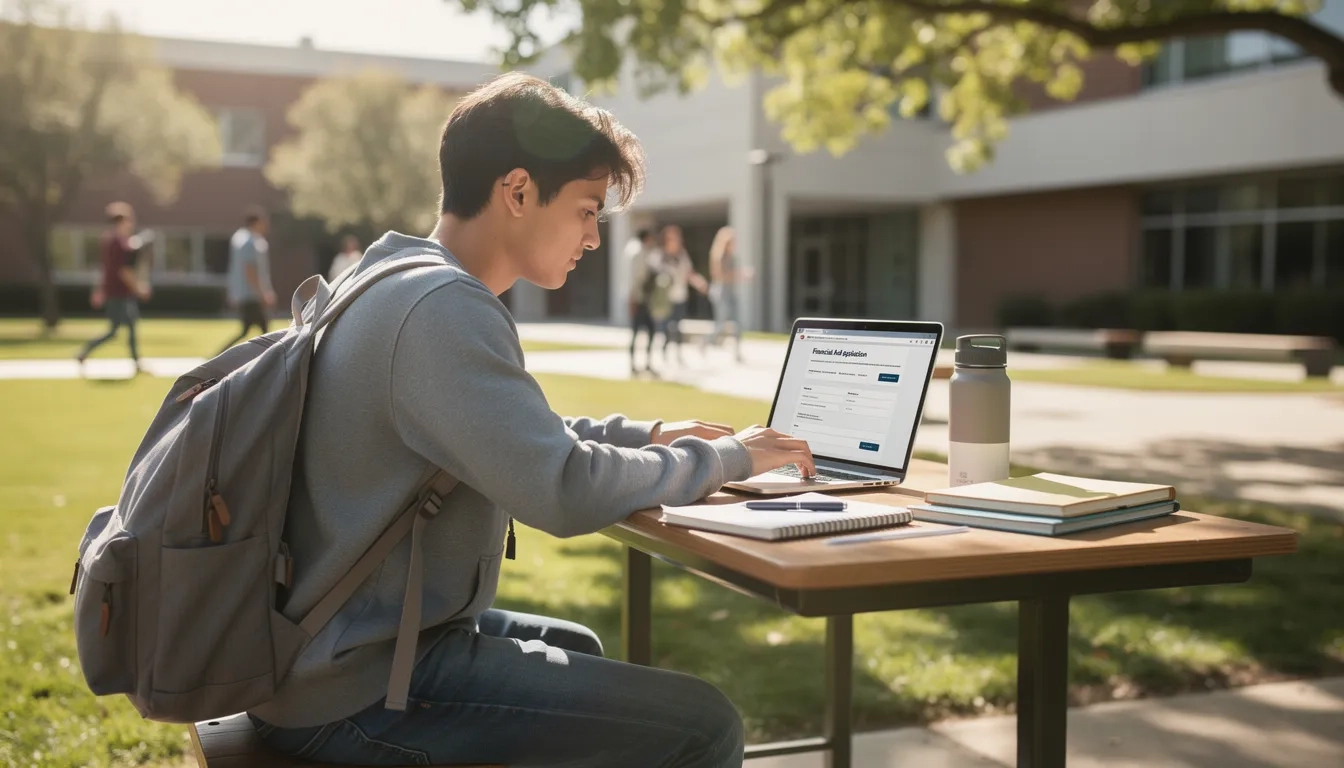
Cover Letter Writing Guide for Students (Even With No Experience)
Here's a number worth sitting with: students who consistently send cover letters get hired at a 35.8% rate. Those who never bother? 21.2%. That's according to Resume.io's analysis of hiring outcomes across thousands of applications, and the gap, nearly double the success rate, comes from one document most students either skip or dash off in 20 minutes. The persistent myth is that nobody reads them. Data from Resume.io's survey of 450 hiring managers says otherwise.
Why Cover Letters Still Matter More Than You've Been Told
45% of hiring managers automatically reject applications that don't include a cover letter — even when the job posting listed it as optional. That's not a fringe preference. That's nearly half the jobs you apply to, quietly closed before anyone reads your resume.
The 36% figure is even more useful to know: that share of hiring decision-makers starts their review with the cover letter, before opening the resume at all. Your first impression is formed on a document most students treat as a box to check.
Including a well-written cover letter makes you 1.9 times more likely to land an interview. Not magic. Just evidence that you put thought into the application.
"63% of HR professionals want candidates to explain their motivation for applying — and they're looking for that explanation in the cover letter, not the resume." — Resume.io Hiring Manager Survey, 2025
The myth worth killing: "Nobody reads them." Some don't. But 24% of hiring managers read every single one, and 35% read at least some. For competitive internships and entry-level roles where the resume pool is often interchangeable, the cover letter is where decisions actually get made.
What Hiring Managers Are Actually Looking For
Three questions run through a recruiter's head when they open your letter:
- Does this person want this job specifically? A letter that could apply to 50 companies fails this test in the first paragraph.
- Can they communicate clearly? 24% of recruiters explicitly use cover letters to assess writing ability.
- Is there evidence they can contribute? Skills mentioned without context get skipped. Skills tied to examples get remembered.
What they're not looking for: a copy of your resume. If your cover letter restates the same bullet points, you've wasted the one space where you could actually stand out.
One more data point that should change how you approach applications: 47% of hiring managers say they would not hire someone who appears unfamiliar with the company. Fifteen minutes of research before writing a single word has a direct, measurable payoff.
The Structure That Works
A student cover letter doesn't need to be long or clever. It needs to answer those three questions clearly. Here's the format that consistently outperforms others for entry-level applicants:
| Section | What to Include | Target Length |
|---|---|---|
| Header | Name, email, phone, date | 4–5 lines |
| Salutation | "Dear [Hiring Manager Name]" — actual name, not generic | 1 line |
| Opening Paragraph | Hook + specific role + why this company | 3–4 sentences |
| Body Paragraph | 2–3 transferable skills with concrete examples | 4–6 sentences |
| Closing | Enthusiasm + specific call to action | 3–4 sentences |
Keep the whole thing between 300 and 380 words. Resume.io's survey data shows 70% of employers prefer cover letters at half a page or less, and 60% spend two minutes or fewer reading. Every extra sentence is a gamble on a reader who's already moving fast.
Format matters, but not dramatically. Arial or Calibri at 10–12pt, standard margins. Unusual fonts or cramped spacing signal inexperience before a reader processes a single sentence.
Writing Without Experience: How to Make Your Background Count
This is where most advice fails students. "Focus on transferable skills" is technically correct but useless without knowing how to actually do it.
Reframe what you've already done, precisely. The group project for your Marketing Strategy course is "cross-functional project management" — you coordinated deliverables, set milestones, divided work. Your role as treasurer in student government is "financial oversight of a real operating budget." Your volunteer shift at a food bank during finals week is "operations under time pressure." These aren't exaggerations. They're accurate translations.
Handshake's career research found students consistently undersell academic work by treating it as irrelevant to employers. Companies hiring entry-level candidates know they're not getting five years of experience. What they're actually evaluating is whether you can think, communicate, and connect your background to their specific problem.
Some common student experiences, translated into professional language:
- Class presentations and seminars → public speaking, stakeholder communication
- Research papers or thesis work → independent analysis, synthesis under deadline
- Study abroad or international coursework → cross-cultural adaptability
- Campus leadership roles → team coordination, event logistics, budget management
- Competitive teams or academic clubs → performance under pressure, goal-setting
The thing to avoid: starting with what you want to gain. "I'm hoping to develop my skills in..." frames the letter around what's in it for you. Flip it. Lead with what you bring.
The Opening Paragraph: Where Most Students Lose the Reader
41% of hiring managers say the introduction is the most important part of a cover letter. Most students blow it in the first sentence.
The generic opener that should be retired:
"My name is Sarah and I am writing to apply for the Marketing Internship at your company."
The employer already knows your name. They know the role. "Your company" tells them you copied this from a template. That sentence communicates nothing and wastes the most valuable real estate in the document.
What works instead is a direct statement of fit, grounded in something specific about the company or role:
"After two semesters studying consumer behavior at the University of Texas, I started tracking how companies use behavioral segmentation in campaigns — and noticed that GreenWave's 2024 investor presentation highlighted this as a core differentiator. The Marketing Intern role seemed like the obvious connection."
That opener does three things in 47 words: shows genuine knowledge of the company, connects academic work to professional interest, and signals that this letter was written for this application and no other. It's hard to ignore because it proves you did your homework.
The data backs this up too. Remember: 47% of hiring managers say they'd reject someone who seems unfamiliar with the company. A strong opening is the fastest way to prove you're not that candidate.
The Mistakes That Sink Student Cover Letters
Some of these are obvious. One of them is the elephant in the room that nobody addresses directly.
Apologizing for your inexperience is probably the most damaging habit, and the most common among students. Phrases like "Although I don't have direct experience in this field..." immediately put you on the defensive. Skip it entirely. State what you do have.
Using "your company" instead of the company's actual name is a dead giveaway that you're mass-applying. An assistant director at Hofstra University's Career Center has noted it's one of the first things recruiters look for. One careless copy-paste tells them you didn't care enough to check.
Other patterns that hurt:
- Misspelling the hiring manager's name (always verify on LinkedIn before sending)
- Writing past the one-page mark
- Ending passively with "Thank you for your consideration" instead of requesting a next step
- Focusing on what you hope to gain rather than what you can contribute
One technical note on errors: 58% of employers automatically discard cover letters with spelling or grammar mistakes, per Resume.io's data. This is the easiest rejection category to avoid. Read it aloud. Have one other person read it. Then run spell-check.
Putting It Together: Before and After
Here's a concrete transformation. A junior applying to a retail company's business analytics internship.
Before (generic): "I am a junior at State University majoring in Business Analytics. I am a hardworking and dedicated individual who would be a great fit for your company. I have taken several relevant courses and believe I can bring value to your team."
After (specific): "I've spent the past year building dashboards in Excel and Tableau for a campus organization tracking attendance and fundraising trends, and I noticed that Nordstrom's annual report identified inventory forecasting as a key growth priority. The Business Analytics Intern role felt like where those two things meet."
The second version names a real company initiative, demonstrates tool proficiency, and shows prior research. It's also 52 words — shorter than the generic version. Specificity takes less space, not more. That's the counter-intuitive part most students miss.
Bottom Line
Three things separate a cover letter that gets a callback from one that gets deleted in 8 seconds:
- Personalization that proves research. Name the company's actual initiative, product, or recent announcement. Signal that this letter was written for this job and no other.
- Evidence, not adjectives. "Hardworking" is a claim. "Led a four-person team that delivered a project three days ahead of deadline" is evidence. Hiring managers want the latter.
- A strong opening paragraph. The introduction does the most work. Spend half your writing time there.
Students with no professional experience aren't at a disadvantage. They're in a different category, evaluated on different evidence. The game is mostly about how well you make the case for yourself. Make it specific. Keep it short. Send it every time.
Frequently Asked Questions
Do I need a cover letter if the job posting says "optional"?
Yes — send it. Resume.io's survey found 72% of hiring managers expect a cover letter even when the posting marks it optional. Skipping it is a missed opportunity, not a neutral choice. Think of "optional" as "strongly encouraged by people who won't tell you directly."
How long should a student cover letter be?
Between 300 and 380 words is the target. Most hiring managers spend fewer than two minutes reading one, and 70% prefer letters at half a page or less. Three focused paragraphs is enough — don't pad it to fill space.
Should I mention my GPA in the cover letter?
Only if it's 3.5 or higher and the role explicitly values academic performance (research positions, finance programs, consulting firms that screen by GPA). Otherwise leave it out. The cover letter is for making a narrative case; your resume handles the numbers.
Is it okay to use AI to help write my cover letter?
Using AI to draft, outline, or edit is common practice now. But don't submit an unedited AI output. Resume.io's data suggests 80% of hiring managers can now identify letters written entirely by AI. Use it as a starting point, then rewrite in your own voice and add company-specific details only you could know.
What if I can't find the hiring manager's name?
Check LinkedIn first — search the company name and filter by the relevant department or team. Look for the recruiter or team lead listed on the job posting. If you genuinely can't find a name after looking, "Dear Hiring Manager" is acceptable. "To Whom It May Concern" reads as outdated and should be avoided entirely.
How do I close a cover letter without sounding passive?
End with a confident, specific ask rather than a trailing thank-you. Something like: "I'd welcome the chance to talk about how my analytics work could support your team's forecasting goals — I'm available any time this week for a brief call." Direct without being pushy, and it gives the reader a clear next step rather than leaving the ball in the air.
Sources
- 50+ Intriguing Cover Letter Statistics & Insights (2025)
- 50+ Cover Letter Statistics for 2026 (Hiring Manager Survey)
- How to Write an Internship Cover Letter: 7 Tips
- How to Write a Cover Letter in 2026: AI-Proof Strategies
- 12 College Student Cover Letter Examples & Writing Guide
- How to Write a Cover Letter in 2026: Steps, Examples, Tips