Creighton University: Programs, Rankings, and What Life Is Really Like
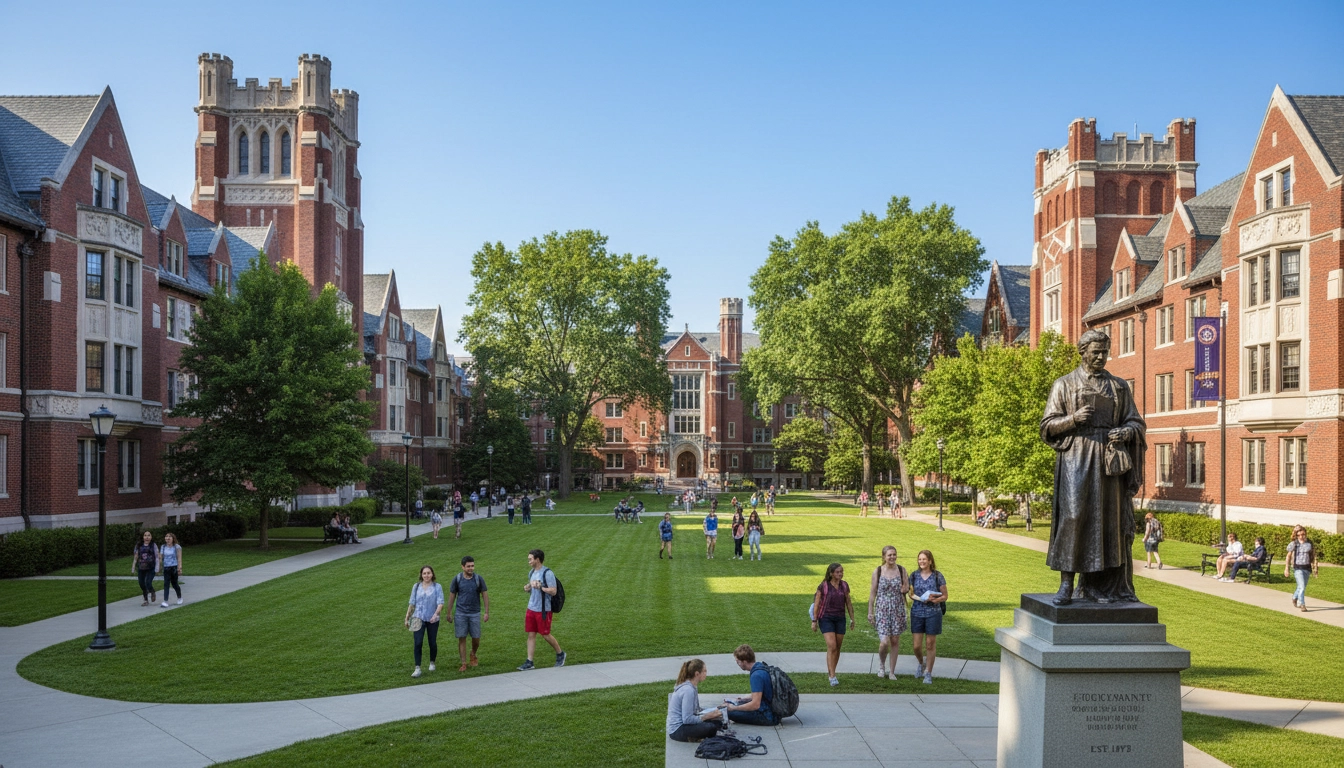
Creighton doesn't make most people's shortlist. Ask a high schooler to rattle off elite private universities in the Midwest, and they'll say Northwestern, Notre Dame, maybe Wash U. Creighton sits at #117 in U.S. News national university rankings — and that number tells almost none of the story. Its physical therapy program ranks #10 in the country. Its health sciences programs routinely beat schools ranked 50 spots higher. And 98% of graduates land jobs, volunteer positions, or graduate school seats within six months of walking across the stage. Once you look past the overall number, a pretty different picture emerges.
A Jesuit Education That Actually Shows Up in the Classroom
Cura personalis — care for the whole person — is the guiding philosophy behind Creighton's Jesuit tradition, and at most Catholic universities this phrase lives exclusively in the admissions brochure. At Creighton, it shows up in actual policy.
The 10:1 student-to-faculty ratio means professors genuinely know students' names. Over 50% of Arts and Sciences students take part in hands-on undergraduate research. A remarkable 83% of undergraduates complete at least one "essential learning experience" — an internship, research project, or community engagement — before graduation.
The Pre-Professional Scholars Program is probably the clearest expression of this philosophy in practice. Described by the university as the country's most complete program of its kind, it offers conditional acceptance to students entering programs in dentistry, law, medicine, occupational therapy, pharmacy, and physical therapy. Students who meet academic benchmarks during undergrad bypass the normal competitive admissions cycle for professional school. That's not a minor perk. For a pre-med student, that's four years of significantly reduced anxiety about the next step.
"They make it well known that all faiths are accepted. The Ignatian values are important and relevant." — Creighton student, via the university's academic overview
Programs: Where Creighton Actually Punches Above Its Weight
The full program catalog spans 140+ academic programs across eight schools: Arts and Sciences, Business, Nursing, Medicine, Dentistry, Law, Pharmacy, and Graduate Studies. That scope is unusual for a school with only 4,300 undergraduates. Most schools this size are missing two or three of those schools entirely.
The health sciences cluster (more on this below) and the Heider College of Business are the two standout pillars. But the university also offers strong programs in pre-law, education, and the social sciences, and its journalism and communication program draws students who want small-school access to real internship pipelines in Omaha's growing media market.
What's worth flagging here: Creighton is genuinely research-active despite its size. The university has produced 27 Fulbright Scholars since 2007 — a rate that puts it in the top 2% of Catholic universities for that honor. For undergrads interested in graduate study, that matters.
Rankings: The Full Picture
The headline number — #117 among national universities — reflects a broad formula that weighs factors like research output, financial resources, and peer assessment. Schools with massive research budgets and graduate programs dominate that list.
But look at the specific program and experience rankings and a sharper picture forms.
| Category | Creighton's Rank |
|---|---|
| National Universities (Overall) | #117 |
| First-Year Experiences | #33 |
| Undergraduate Teaching | #39 |
| Undergraduate Research/Creative Projects | #44 |
| Most Innovative National Universities | #56 |
| Undergraduate Nursing | #40 (top 6%) |
| Physical Therapy (Graduate) | #10 |
| Physician Assistant (Graduate) | #14 |
| Occupational Therapy (Graduate) | #15 |
| Business Analytics (Undergrad) | #14 |
| Business Accounting (Undergrad) | #17 |
| Business Finance (Undergrad) | #18 |
| Online Finance MBA | #6 |
| Online Business Analytics MBA | #7 |
Source: U.S. News & World Report 2026, Princeton Review 2026
My take: the overall ranking is the least useful number on this table. If you're enrolling for an undergraduate teaching environment rather than a research credential, or targeting a specific health science, those middle rows are what should drive your decision. The #33 for First-Year Experiences isn't accidental — it reflects an intentional investment in retention (94% of freshmen return for sophomore year).
Health Sciences: The Strongest Part of the Portfolio
Creighton's health sciences programs belong in a different conversation entirely from its overall ranking. Physical therapy at #10 nationally means Creighton PT graduates compete with programs from much larger, more recognized research universities. Physician assistant at #14 and occupational therapy at #15 follow the same pattern.
The undergraduate nursing program ranking — #40 nationally, placing it in the top 6% of all nursing programs — is backed by genuine infrastructure. The university runs state-of-the-art simulation facilities where students practice clinical skills before touching real patients. In nursing education, simulation access is the elephant in the room that separates programs that produce strong nurses from ones that don't.
The medical school, dental school, and pharmacy program round out what is effectively a complete health sciences campus. For students considering any health-related career path, the concentration of these programs on a single campus creates an unusual cross-disciplinary environment. A pre-med undergraduate can interact with dental and pharmacy students in ways that simply don't happen at schools without this density.
- Physical Therapy: #10 nationally
- Physician Assistant: #14 nationally
- Occupational Therapy: #15 nationally
- Nursing (Undergrad): #40 nationally, top 6%
- Pre-professional pathways available for medicine, dentistry, pharmacy, and law
Heider College of Business: Not Just Good "for a Small School"
People sometimes assume a business school at a 4,300-student university can't compete with a flagship state school program. The Heider College of Business is worth understanding on its own terms.
Analytics at #14 and finance at #18 are rankings that hold up against programs at institutions twice Creighton's size. The Heider Mindset Curriculum integrates coursework with real business experience from the first year — which is increasingly common in name but less common in execution. The business analytics figure matters particularly because demand for analytics talent in mid-market cities like Omaha (four Fortune 500 company headquarters call it home) creates direct recruiting pipelines.
The online programs tell a parallel story. The Online Finance MBA ranks #6 nationally. Online Business Analytics MBA ranks #7. For professionals already in the workforce, these numbers represent real options. The Princeton Review placed Creighton at #11 for community service engagement nationally (across all colleges), which reflects how the Jesuit mission bleeds into the business curriculum as well — ethics and community investment are explicitly baked into coursework, not optional extras.
Campus Life and Living in Omaha
With 300+ student organizations and a 94% freshman-to-sophomore retention rate, Creighton clearly builds something worth staying for. The student body skews national — nearly 80% of undergraduates come from outside Nebraska — which creates a campus culture that doesn't feel provincial.
Athletics run through the BIG EAST Conference. The men's basketball team plays at the 18,000-seat CHI Health Center Omaha and regularly earns NCAA Tournament bids. Soccer and volleyball compete at high levels too. For a school of 4,300 undergrads, the presence of 14 Division I programs gives campus weekends an energy that surprises first-time visitors.
Omaha itself is a bigger asset than the school's location in Nebraska would suggest. Forbes named Omaha the #1 best city to move to in 2024. The Old Market District offers art galleries, restaurants, and live music. Fontenelle Forest and Gene Leahy Mall put outdoor recreation within a short drive. Tuition dollars stretch further here (housing costs are a fraction of Chicago or Boston), and the city's growing tech and finance sectors mean students aren't exporting themselves after graduation to find jobs.
A few things worth knowing about day-to-day life:
- Freshmen and sophomores are required to live on campus, which accelerates community building early
- 1,700+ students participate in club and intramural sports annually
- Campus Ministry and the Schlegel Center for Service and Justice run robust service programs, with the Princeton Review ranking Creighton #11 for community service engagement
- The Career Center posts 97,000+ job and internship opportunities annually (a high number relative to the student body size)
Bestselling education author Jeffrey Selingo included Creighton on his list of 75 "new dream schools" in his book Who Gets In and Why, citing its "exceptional access to experiential learning" and the Pre-Professional Scholars Program specifically.
The Financial Reality
99% of Creighton undergraduates receive some form of scholarship or financial aid. That's not a rounding error — it reflects an active institutional commitment to making attendance work financially. Creighton sits in the range of private Jesuit universities tuition-wise, which puts it in the same ballpark as Loyola Chicago or Fordham. But with nearly every enrolled student receiving aid, the sticker price is rarely the number students actually pay.
The cost-of-living advantage of Omaha is real and underdiscussed. Off-campus apartments near campus run substantially less than equivalent housing in Boston, New York, or even Chicago, which affects the total cost of attendance in ways the tuition line alone doesn't capture. For graduate students in health sciences programs, this matters even more since those programs can run three to four years.
The graduate program aid picture varies by program — health sciences programs are competitive for scholarships, and the online business programs allow working professionals to avoid the income opportunity cost of full-time enrollment.
Bottom Line
Creighton is one of those schools where the overall ranking actively works against it. The #117 national ranking belongs to a list designed partly around research output and endowment size. None of that matters much if you're choosing a school for physical therapy, physician assistant training, occupational therapy, nursing, or business analytics — all areas where Creighton places in the national top 20.
- If health sciences is your path: Creighton's PT (#10), PA (#14), and OT (#15) programs are legitimate top-tier options, not regional fallbacks.
- If you want a teaching-focused undergrad experience: The #39 ranking for undergraduate teaching and 10:1 faculty ratio reflect genuine structural investment.
- If city life matters to you: Omaha is more livable, affordable, and opportunity-rich than its reputation suggests. Forbes agreed.
- If the Pre-Professional Scholars Program fits your plans: Start there. Conditional acceptance to professional school changes the entire calculus of the undergraduate years.
The Jesuit mission isn't just marketing — the retention rate, the service engagement rankings, and the employment outcomes all point to an institution that takes student development seriously. That's not true everywhere.
Frequently Asked Questions
Is Creighton University hard to get into?
Creighton's acceptance rate sits in the moderately selective range, typically accepting around 70% of applicants for general undergraduate admission. However, the Pre-Professional Scholars Program — which guarantees conditional acceptance to medical, dental, pharmacy, and other professional schools — is significantly more competitive and requires strong academic credentials from the start.
What is Creighton University best known for academically?
Health sciences. Physical therapy (#10), physician assistant (#14), occupational therapy (#15), and undergraduate nursing (#40) are nationally ranked programs that attract students who specifically choose Creighton for those pathways. The Heider College of Business analytics (#14) and finance (#18) programs are lesser-known but equally strong.
Is Creighton University a good school for pre-med students?
Yes, and the Pre-Professional Scholars Program makes it distinctively attractive. Students who are accepted into the program and meet academic benchmarks during undergrad receive conditional guaranteed admission to Creighton's medical, dental, or pharmacy school — removing the uncertainty that defines most pre-med paths. The campus-level integration of undergraduate and professional health programs also creates mentorship and shadowing access that isolated undergraduate colleges can't replicate.
Myth vs. Reality: Is Creighton only for Catholic students?
Myth. While Creighton is a Catholic, Jesuit university, students of all faiths (and no faith) attend. The Ignatian values emphasize service, ethics, and intellectual rigor — not denominational conformity. As one student noted, the university "makes it well known that all faiths are accepted." Campus Ministry and faith programming exist, but participation isn't required.
What is life like in Omaha for Creighton students?
Better than the geography suggests. Omaha's Old Market District, Capitol District, and Midtown Crossing give students access to dining, music, and cultural venues without the cost of living in a coastal metro. Forbes named Omaha the #1 best city to move to in 2024. The city's four Fortune 500 headquarters create real recruiting pipelines for business and finance students. And the Henry Doorly Zoo, Joslyn Art Museum, and a genuinely strong live music scene mean weekends aren't spent staring at cornfields.
How does Creighton's financial aid compare to similar schools?
99% of undergraduates receive scholarships or grants — an exceptionally high coverage rate for a private university. Creighton's financial aid model tends to make the effective cost of attendance meaningfully lower than the listed tuition. Omaha's lower cost of living further reduces total expenses compared to Jesuit peers in Chicago, New York, or Washington, D.C.