How to Establish Residency for In-State Tuition: A Complete Guide
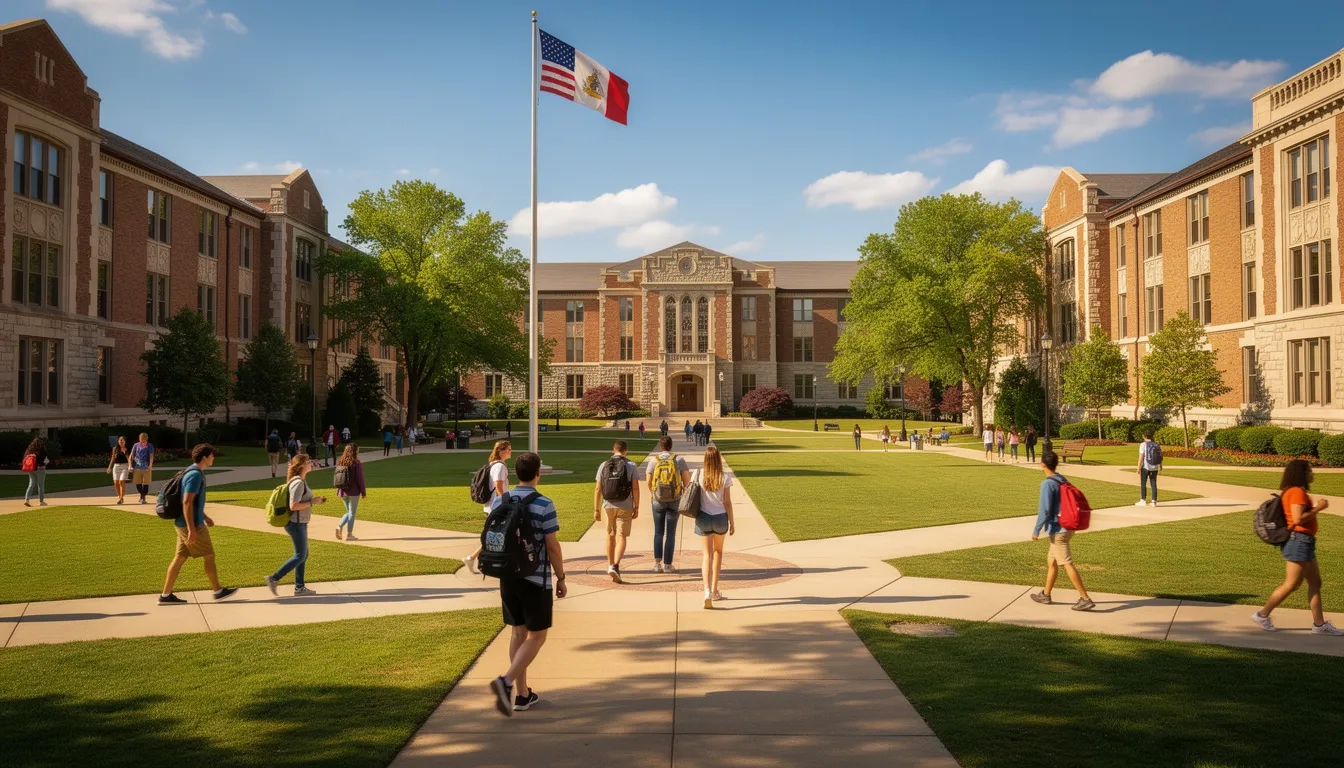
The difference between in-state and out-of-state tuition at a public university is not a rounding error. According to the Education Data Initiative, out-of-state students at four-year public colleges pay an average of $28,297 per year versus $9,750 for in-state students. That's $18,547 annually — or roughly $74,188 over four years — for the exact same degree, the exact same professors, and the exact same campus parking nightmare.
Most students accept that gap as fixed. It isn't. Residency status can be changed, and knowing how the system actually works puts you in a much better position than just hoping your situation qualifies.
Why States Draw the Line Where They Do
Public universities run partly on state tax revenue. Residents and their families have been paying into that system for years, so the state subsidizes their tuition. An out-of-state student hasn't contributed to that tax base — at least not yet — so the university charges the full unsubsidized rate instead.
This isn't a policy quirk or bureaucratic pettiness. The residency requirement exists specifically to prevent students from "becoming residents" just by enrolling. Every state builds its rules to close that loophole, which is why the process involves more than just signing a lease.
The good news: if you genuinely move to a state, put down real roots, and give the clock time to run, the lower rate is there for you. The bad news: doing it halfway almost always fails.
Domicile vs. Residency: They're Not the Same Thing
Here's where most people get tripped up. States don't just want proof that you're physically in their borders — they want to establish your domicile, which is a legal concept meaning your fixed, permanent home to which you intend to return whenever absent.
Physical presence is necessary but not sufficient. You also have to demonstrate intent to stay.
A student who moves to Colorado for college, rents an apartment, and gets a Colorado driver's license has physical presence. But if they kept their parents' address as their home base, still vote in their home state, and plan to move back after graduation — that's not domicile. Colorado would (correctly) classify them as an out-of-state student.
The question isn't "Do you live here?" It's "Is this where you live?"
That distinction sounds philosophical, but it has real paperwork consequences. Every action you take that ties you to your old state weakens your claim. Every action that ties you to your new state strengthens it.
The 12-Month Clock and How It Actually Works
Most states require 12 consecutive months of domicile before enrollment (or before the first day of a given term). A few outliers exist:
- Arkansas: 6 months
- Alaska: 24 months
- Tennessee: no durational requirement at all
- California and Arizona: 2 years for independent students
The clock starts when you establish domicile. Not when you enroll, not when you submit your application — when you move and begin putting down roots.
The single most common misconception: time spent enrolled as a student does not count toward the durational requirement. In most states, if your reason for being in the state is education, those months don't accumulate toward residency — even if you've been living there for three years. The residency has to be established independent of your student status.
This is why a "gap year" strategy genuinely works. Move to the target state, work full-time, build your paper trail, wait out the required period, then enroll. Yes, it costs a year. The math usually still wins.
What Documentation You Need to Build Your Case
No single document proves residency. States want a preponderance of evidence — multiple items that together paint a picture of someone who has genuinely made the state their home.
Primary documents (each one carries significant weight):
- State driver's license or state-issued photo ID
- State and federal income tax returns filed with in-state address
- Voter registration
- Home ownership (deed or mortgage statement)
- Lease agreement and utility bills
Supporting documents (add credibility when combined with primaries):
- Vehicle registration
- Pay stubs with in-state employer address
- Bank account with local branch
- Library card, professional licenses, hunting/fishing licenses
- Membership in local civic or community organizations
The Finaid resource recommends having at least two government-issued documents, with at least one dated 12 or more months before your first day of classes. But in practice, the stronger applications include five or six supporting items, not two.
Here's a practical checklist for the first 30 days after moving:
- Update your driver's license to the new state
- Register to vote at your new address
- Transfer vehicle registration
- Open a local bank account or update your address on existing accounts
- File a Declaration of Domicile if your target state offers it (Florida, for example, has a formal Declaration of Domicile that you can file with the county clerk — it's one of the cleaner ways to timestamp your intent)
- Find employment, even part-time
Dependent vs. Independent: Which Rules Apply to You
The rules split depending on whether you're a dependent or independent student — and this changes everything.
If you're a dependent student, your residency follows your parents'. You don't need to have personally lived in the state for 12 months; your parent or legal guardian does. A family that moves to Tennessee gives a dependent college-age child immediate in-state eligibility at University of Tennessee (subject to the parent meeting the residency standard first).
If you're an independent student, you carry the residency requirement on your own. Most states define independent using criteria similar to the federal financial aid definition: over 24, married, a veteran, an orphan, a ward of the court, or someone providing more than half their own financial support. Some states set the threshold lower.
A few things that disqualify independent status are non-obvious. If your parents co-sign your student loans, some states count that as financial support from them — which could reclassify you as dependent. If they're paying your car insurance or your cell phone plan, same risk. The standard in most states is that you must provide more than 50% of your own support, and "support" gets defined broadly.
State-by-State Difficulty: A Realistic Picture
Not all states make this equally accessible. InStateAngels, which tracks state-by-state residency rules in detail, categorizes states into four rough tiers:
| Difficulty | States |
|---|---|
| Easiest | Arkansas, Nevada, New Mexico, North Dakota, South Dakota, Utah |
| Moderate | Alabama, Florida, Iowa, Kansas, Missouri, Ohio, Oregon, Texas, Virginia |
| Most Difficult | Alaska, Colorado, Georgia, Indiana, Massachusetts, New York, Pennsylvania, Wisconsin |
| Complex/Special Rules | California, Michigan, Vermont |
North Dakota sits at the easier end because its rules are relatively straightforward and its in-state/out-of-state gap, while real, is smaller than average. Indiana is worth flagging specifically: if a student applies for admission before establishing residency, they are permanently barred from reclassifying at that institution. Apply first, and you've locked in out-of-state rates for your entire degree. That's not a myth — it's written into the policy, and it catches students every year.
California gets its own category because the rules are genuinely complicated. The state requires two years of residency plus financial independence for independent students, and the documentation burden is among the highest in the country.
Exceptions That Can Short-Circuit the Wait
Some students don't have to run out the clock at all. The most significant exceptions:
Military and veterans: Federal law (the Veterans Access, Choice, and Accountability Act) requires public universities to charge in-state rates to veterans and their dependents if the student lives in that state while attending, regardless of how long they've been there. This is one of the cleaner carve-outs in higher education policy.
Marriage to a resident: Several states eliminate the waiting period entirely if you marry someone who qualifies as a state resident. Not every state offers this, but it's worth checking.
Full-time employment: Alabama, Colorado, Florida, and others waive or reduce durational requirements for students who are employed full-time in the state. This creates a legitimate path for working adults going back to school.
University employees: Faculty and staff at public universities often qualify immediately, and that benefit typically extends to their families.
Children of first responders: A number of states grant automatic in-state eligibility to dependent children of law enforcement officers or firefighters killed or permanently disabled in the line of duty.
If you fall into one of these categories and haven't checked whether an exception applies, you may be leaving money on the table.
Common Mistakes That Get Applications Denied
Some of these are obvious in retrospect. None of them are fun to discover after the tuition bill arrives.
Keeping out-of-state ties active. An out-of-state driver's license while claiming a new-state address is a red flag. Continued voter registration in your home state is another. The tuition classification officer (the person at the Registrar's or Admissions office who actually makes the call) will look for these contradictions.
Starting the clock too late. Some students move to a new state and don't take any formal steps to establish domicile right away. The 12-month period has to be documented from a clear starting point. If you can't show when the clock began, the institution may not be able to verify you've met the requirement.
Establishing residency right before application deadlines. This pattern — suddenly getting a local driver's license and voter registration the month before applying — looks exactly like what it often is. Schools are trained to spot it.
Misunderstanding the "not incidental to education" rule. Even if you moved to the state for non-educational reasons and genuinely intend to stay, institutions can deny the claim if the totality of your circumstances suggests education was the primary motivation. A thin documentation trail doesn't help.
Not appealing a denial. Adverse decisions can generally be appealed once per term. The best appeals bring in new information that wasn't in the original application — additional documentation, clarification on financial independence, or evidence of intent that wasn't captured the first time.
Bottom Line
- Start immediately. The moment you know you want to qualify for in-state rates at a specific school, begin building your paper trail. The 12-month clock is real, and it runs from documented domicile, not from when you started thinking about it.
- Build a thick file. Driver's license, voter registration, state tax return, lease, and employment are the foundation. Add whatever else you can. Two documents is the floor, not the target.
- Cut ties to your old state. Out-of-state driver's license, continued voter registration elsewhere, and parents claiming you as a dependent are the three most common reasons applications get denied.
- Know your state's specific rules before you apply to schools. Indiana's permanent penalty rule is the starkest example — applying before qualifying locks you out permanently at that institution.
- If you're a veteran or active military, check your federal protections first. The Veterans Access, Choice, and Accountability Act may mean you don't need to establish residency through the standard process at all.
The $18,547 annual gap is worth the paperwork. Do it methodically, do it early, and document everything.
Frequently Asked Questions
Can I get in-state tuition by moving to a state and enrolling immediately?
No. Every state requires a period of domicile established before enrollment, and time spent as a student typically does not count toward that period. Most states set the minimum at 12 consecutive months, meaning you'd need to move, work, and live in the state before enrolling — not after.
Does going to college in a state automatically make me a resident after a year?
This is one of the most persistent myths about residency. Being enrolled as a student does not advance your residency clock in the majority of states. The residency has to be established independent of your educational enrollment. Some states have narrow exceptions for independent students who are fully financially self-sufficient, but the default answer is no.
What happens if I'm denied in-state status — can I appeal?
Yes. Most institutions allow one appeal per academic term. Successful appeals typically introduce documentation that wasn't in the original application, such as a longer employment history, evidence of community ties, or clarification around financial independence. A denial isn't necessarily final, but you need new information — not just the same case repackaged.
Does marrying someone who lives in the state make me eligible for in-state tuition?
It depends on the state. Some states do eliminate or significantly shorten the waiting period when a student marries a qualifying state resident. Others treat marriage as one factor among many rather than an automatic qualifier. Check the specific policy at your target institution before assuming this applies.
What if my parents live out of state but I've been living independently for years?
If you qualify as an independent student under your state's definition — typically based on age, financial self-sufficiency, veteran status, or marital status — then your residency is determined by your own domicile, not your parents'. The key is meeting the financial independence threshold, which most states set at providing more than 50% of your own support. Parent co-signers on loans, shared cell plans, or insurance payments can complicate this calculation.
Are international students eligible for in-state tuition?
Generally no. Most states require US citizenship or lawful permanent resident status (a green card) to qualify for in-state tuition. Students on non-immigrant visas — F-1 student visas, J-1 exchange visas, B-visitor visas — are typically ineligible, as those visa categories are considered temporary and don't allow for the formation of permanent domicile in US immigration law.
Sources
- In-State Tuition and State Residency Requirements - Finaid
- State Residency Requirements for In-State Tuition - SavingForCollege
- Average In-State vs. Out-of-State Tuition - Education Data Initiative
- State By State Difficulty of Earning In-State Tuition - InStateAngels
- Eligibility for In-State Tuition - Virginia SCHEV