FAFSA with an Incarcerated Parent: What the Rules Actually Say
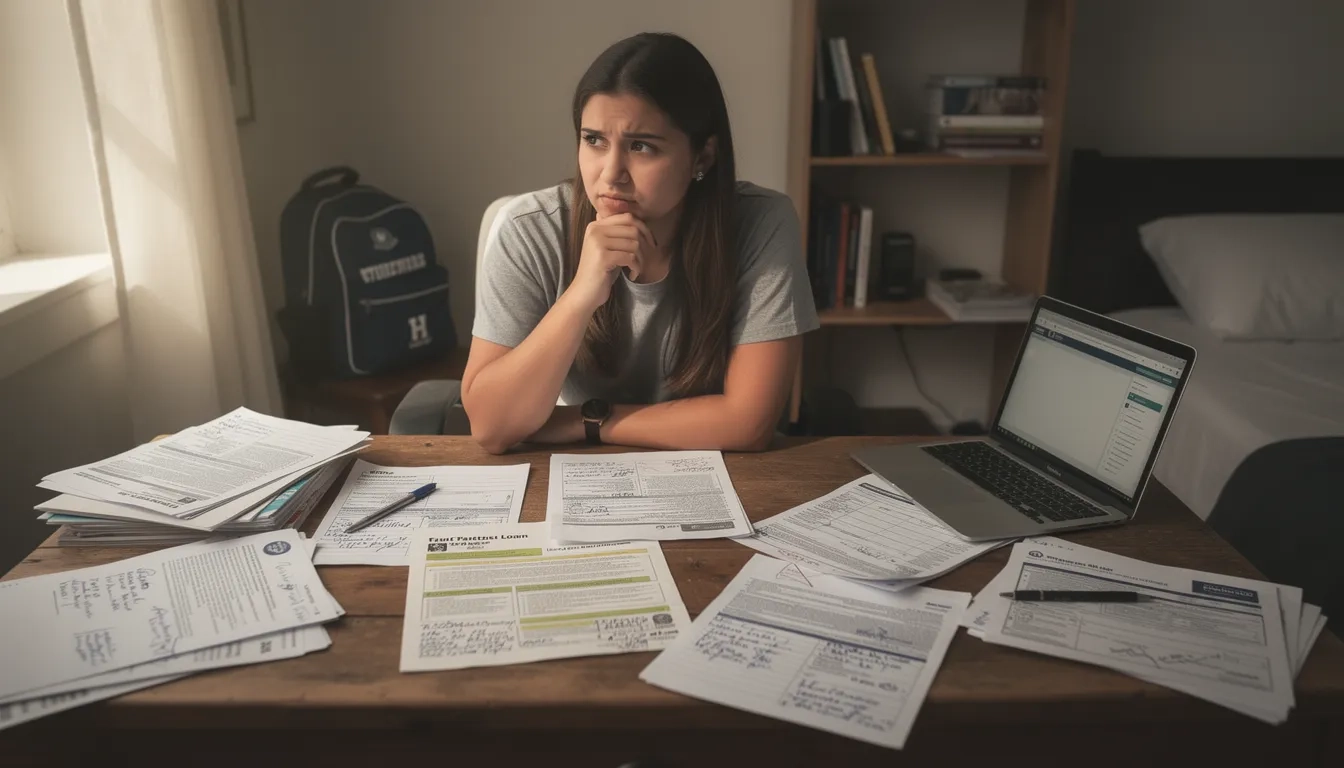
Roughly 2.7 million children in the United States have a parent behind bars on any given day, according to the Prison Policy Initiative. Many of them will eventually apply for college financial aid. When they do, they'll find a form that was designed mostly for "normal" family situations — two parents with W-2 jobs, accessible bank accounts, and the ability to log in and click a consent button.
An incarcerated parent breaks several of those assumptions at once. The FAFSA doesn't tell you that solutions exist. Most high school counselors won't know either. But the 2024-25 FAFSA Simplification Act created real new pathways for students in these situations — and knowing exactly what to ask for is the entire game.
Your Situation Shapes Everything
Before deciding what to do, you need to know which scenario you're actually in. These three situations play out differently enough that they're worth mapping out first.
| Situation | FAFSA Status | What to Focus On |
|---|---|---|
| One parent incarcerated, one not (married or together) | Dependent — report both parents | Non-incarcerated parent leads the filing |
| Custodial parent incarcerated (parents divorced/separated) | Dependent — report incarcerated parent's info | Very low income often means favorable aid |
| Both parents incarcerated, or contact poses a safety risk | Eligible for dependency override | Flag unusual circumstances; submit documentation |
The middle row surprises most students. When the parent you lived with more in the past 12 months happens to be the one who's incarcerated, their near-zero income can actually work in your favor — no override required. More on that in a moment.
When a Parent's Prison Income Actually Helps You
Here is what almost nobody explains up front: federal prison wages are very low. The Bureau of Prisons pays non-UNICOR inmate workers between $0.12 and $0.40 per hour. UNICOR factory jobs go a bit higher. Either way, most incarcerated parents earn somewhere in the range of $300 to $600 per year from prison labor. That number, fed into the FAFSA's Student Aid Index formula, produces a very low family contribution — often pushing a student toward maximum Pell Grant eligibility without any special appeal.
So before assuming you need to fight the system, run your numbers through Federal Student Aid's free online Aid Estimator. An incarcerated custodial parent with near-zero income may already set you up well.
The harder situation is a two-parent married household where one parent is incarcerated and the other has a real income. Both parents' financial information counts when parents are married. A non-incarcerated parent earning $80,000 will weigh against you even if the other parent earns $400 per year in a federal facility. That's where a dependency override becomes strategically important.
One procedural note: if the incarcerated parent can't access the internet (many correctional facilities block it), Federal Student Aid publishes a paper FAFSA designated specifically for incarcerated individuals. The entire household must use the paper process in that case — you can't split filing methods between family members.
The Unusual Circumstances Flag
The 2024-25 FAFSA Simplification Act added an "unusual circumstances" question directly into the application form. For students in difficult family situations, this is the most useful change in years.
If both parents are incarcerated, or if contact with your parents would pose a risk to your safety, you mark this on the FAFSA. You're immediately given provisional independent status, letting you submit the form without parental information and without a parent's signature.
"Provisional" still matters. Your school's Financial Aid Administrator (FAA) reviews the case and makes the final call. Before 2024-25, students had to contact the financial aid office before they could even submit the application. The flag now lives inside the form, creating a documented record from day one.
Per the 2025-26 Federal Student Aid Handbook, parental incarceration is explicitly listed as an unusual circumstance qualifying for consideration. Financial aid administrators have legal authority — and case-by-case discretion — to grant a dependency override converting a student's status from dependent to independent.
FinAid.org's analysis of national aid data found that only about 0.9% of undergraduates under 24 actually receive dependency overrides each year. That number sounds discouraging, but it captures all override requests, most involving far murkier situations than a documented incarceration. A student arriving with official court paperwork is in a much stronger position than average.
Getting the Documentation Right
The approval lives and dies on documentation. Vague appeals rarely work.
Per the 2025-26 FSA Handbook, the two strongest forms of evidence for parental incarceration are:
- Official incarceration documentation: A court order, or a federal/state document confirming the incarceration. An incarceration verification letter on official facility letterhead is the most practical option — most facilities will produce one on request.
- A professional statement: A written or documented phone statement from an attorney, guardian ad litem, court-appointed special advocate, or a TRIO or GEAR UP program representative. This works well when official conviction documents don't exist yet (pre-trial detention) or when transfers make records hard to obtain.
What does not qualify on its own:
- A parent who simply refuses to help with the FAFSA
- Parents who don't claim you as a tax dependent
- Being financially self-sufficient
NASFAA guidance is clear here: incarceration and uncooperativeness are different things. Parental refusal alone does not meet the unusual circumstances threshold. Documented incarceration does.
My honest take: the burden placed on these students is unfairly high. They are navigating family disruption, limited support, and a guidance counselor who likely doesn't know this pathway exists. The system could surface these options automatically. It doesn't. So knowing the exact right request to make is the workaround.
How Your Aid Award Changes
An approved dependency override changes the math significantly.
Independent students with no federal tax filing requirement receive an automatic Student Aid Index of -1,500. That's the floor of the formula. It triggers automatic maximum Pell Grant eligibility — for 2025-26, that's $7,395 per year.
Here's a simplified comparison:
| Student Profile | SAI Result | Annual Pell Grant |
|---|---|---|
| Independent, no tax filing required | -1,500 | $7,395 (maximum) |
| Dependent, incarcerated custodial parent, near-zero income | Low (often under 300) | Near maximum |
| Dependent, non-incarcerated married parent earning $75,000 | ~4,000–6,000 | $0–$2,000 |
The third row is exactly why the override matters so much for two-parent households where the working parent has a solid income — getting that parent's earnings removed from the calculation can shift a student from receiving minimal aid to qualifying for full funding.
Institutional aid from the college itself layers on top of federal Pell grants. Schools frequently match or exceed the federal maximum for students at the -1,500 SAI floor. At community colleges and many public universities, a student who secures independent status with near-zero income can often get their entire cost of attendance covered.
The Timeline That Costs Students Money
Students with unusual circumstances consistently make the same mistake. They wait until spring. By the time they've sorted out their situation and called the financial aid office, it's February or March. Federal Pell is always available, but institutional aid runs out. Schools distribute their own grant money on a rolling basis starting in the fall. Late filers get what's left.
Here's the sequence to follow:
- October 1: FAFSA opens. Submit immediately, even before documentation is ready. Flag unusual circumstances on the form.
- Within 2 weeks of submission: Contact the financial aid office at every school on your list. Use this exact phrase: "I need to request a dependency override due to parental incarceration."
- Within 30 days: Obtain the incarceration verification letter from the facility. For federal prisoners, the Bureau of Prisons' free Inmate Locator at bop.gov helps you identify the correct facility.
- Submit documentation: Send everything in one packet, in writing. Keep copies.
- Follow up at 3 weeks: Most schools process appeals in 2–4 weeks once documents are complete. Federal rules require schools to review independence requests within 60 days of enrollment.
One thing that rarely gets mentioned: a denial at one school does not bind any other. FAAs at different institutions make independent decisions. Borough of Manhattan Community College (BMCC) is a concrete example of a school with a published, semester-specific appeal process and defined deadlines. Not every school is that transparent, but the discretion exists at all of them.
When You Can't Locate a Parent
Sometimes incarceration is only part of the story. The parent may have been transferred between facilities, or their location may be genuinely unknown.
For federal prisoners, bop.gov's Inmate Locator is free and searchable by name. Every state Department of Corrections also maintains its own lookup tool. These let you identify the facility, which opens the door to requesting official documentation.
If you cannot find either parent and have had no contact or financial support for 12 months or more, that situation overlaps with abandonment — a separate unusual circumstance category that also qualifies for a dependency override. Students dealing with incarceration and unknown whereabouts at the same time can document both conditions. The FAA weighs the total picture.
Bottom Line
The deck is stacked against students with incarcerated parents in ways that aren't visible until you're in the middle of it. But the tools are there.
- File FAFSA on October 1 and flag unusual circumstances if both parents are incarcerated or if contact would be unsafe.
- Call the financial aid office immediately after submission and ask specifically for a "dependency override due to parental incarceration."
- Get an incarceration verification letter from the correctional facility. That one document solves most of the problem.
- If only one parent is incarcerated and their income is near zero, run an aid estimate first — you may not need an override at all.
- A denial from one school says nothing about your odds at another. Apply the same documentation at multiple institutions.
Frequently Asked Questions
Does having an incarcerated parent automatically make me an independent student?
No, and this is the most common misconception. Parental incarceration alone does not change your FAFSA dependency status. If one parent is incarcerated and the other is not, you remain a dependent student and must report both parents' information. Only when both parents are incarcerated, or when contact would pose a safety risk, can you pursue a dependency override — and even then, it requires documentation and explicit FAA approval.
My incarcerated parent won't sign the FAFSA. What can I do?
Refusal to cooperate on its own is not sufficient for a dependency override. But if your parent is actually incarcerated and cannot sign because of facility restrictions or transit between facilities, the combination of documented incarceration and an inability to obtain a signature significantly strengthens your case. Bring the facility's verification letter and explain the signature barrier to your financial aid office in writing. Most FAAs have encountered this before.
Do prison wages need to be reported as income on the FAFSA?
Prison wages are generally not subject to federal income tax, but they may count as untaxed income depending on the aid year's instructions. In practice, at $0.12 to $0.40 per hour for most BOP jobs, the annual totals are low enough that they rarely move the SAI calculation by a meaningful amount. If you're unsure how to categorize them, your school's financial aid office can tell you exactly where the figure belongs.
What if I was raised by grandparents while my parents were incarcerated?
If a grandparent legally adopted you, they count as your parent and you report their financial information. If the arrangement was informal, you are technically still tied to your biological parents for FAFSA dependency purposes. However, if neither biological parent has provided financial support or been in contact for 12 or more months, you have a strong case for a dependency override based on abandonment — independent of the incarceration issue. Document both circumstances.
Can my independent status be reversed if a parent gets released mid-year?
Aid years run July 1 through June 30, and dependency status is set at the time of filing. A parent's release mid-year does not automatically change your status for that award year. For the following year's FAFSA, you would reassess your situation and either re-document ongoing unusual circumstances or return to dependent filing if the family picture has genuinely changed.
Sources
- Prison Policy Initiative – Youth and Families Research
- 2025-26 Federal Student Aid Handbook: Chapter 5 – Special Cases
- FinAid.org – Dependency Overrides
- Final 2025-26 FAFSA Form and FAFSA Form for Incarcerated Students – FSA Partners
- BMCC – Professional Judgment and Special Circumstances
- Reporting Parent Information on Your FAFSA – Federal Student Aid