FAFSA Renewal vs First-Time Filing: What Actually Changes
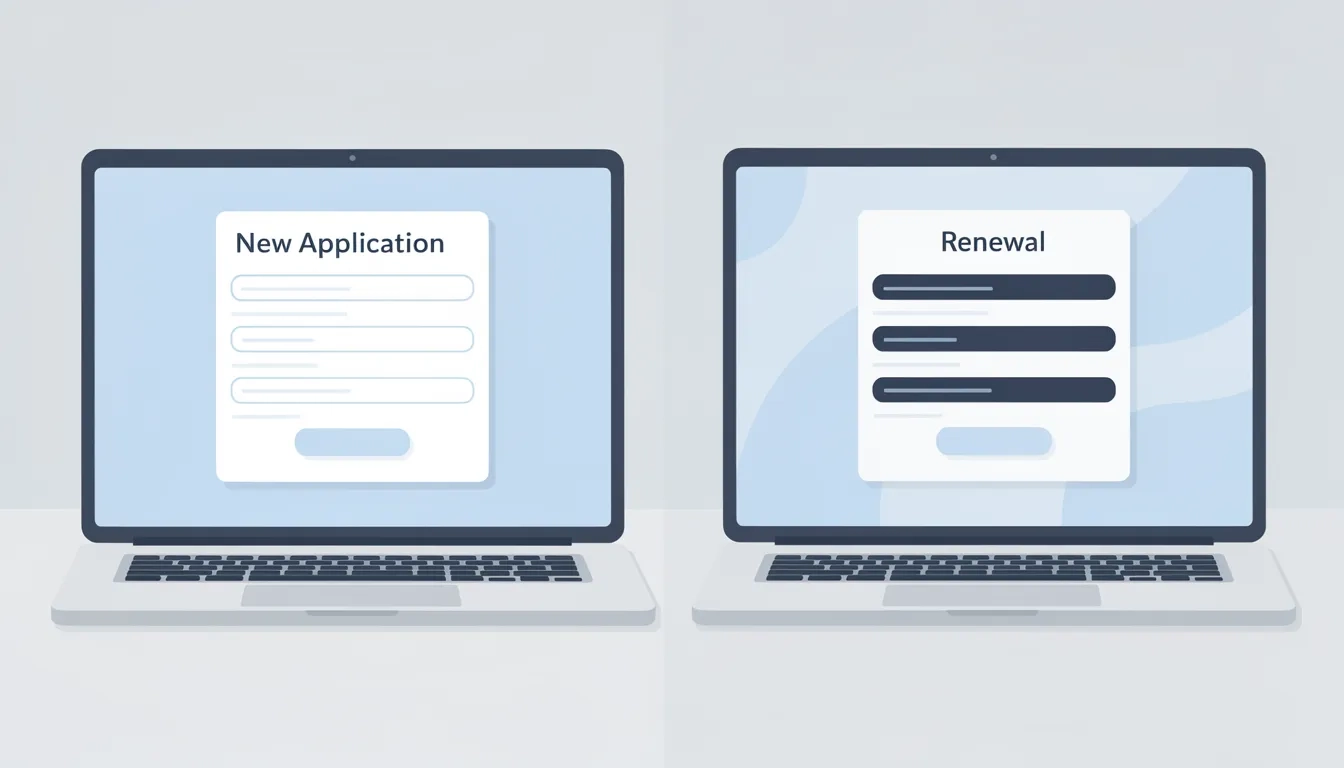
Most returning students approach FAFSA renewal like it's an auto-renewal subscription. Click in, confirm your details, click out. That assumption has quietly cost families real money. Miss the annual IRS consent step, let a stale school list ride, or overlook a dependency status change, and your aid package can be delayed by weeks — or recalculated in ways you won't like. The renewal form is faster than a first filing, but it is absolutely not automatic.
The Core Difference: What "Renewal" Actually Means
When you log into studentaid.gov as a returning student, you see an option to renew your prior-year FAFSA instead of starting from scratch. Choosing renewal pulls forward the biographical skeleton of your previous application.
Your name, Social Security number, date of birth, contact information, and prior school list all carry over. You're not staring at a blank form. That alone cuts down on transcription errors, which were a meaningful source of processing delays under the old paper-heavy system.
First-time filers build everything from zero. They create an FSA ID, invite contributors (parents for dependent students, a spouse if applicable), and authorize IRS data transfer for each person. For a typical dependent college freshman, that means at minimum two separate people completing two separate login sequences before the form is ready to submit.
Renewers skip most of that setup. Typical completion time for a returning student runs 15 to 30 minutes. First-timers should plan on 45 to 90 minutes, assuming nothing complicated comes up.
What Pre-Populates and What Doesn't
Here's the honest breakdown of what the renewal path does and doesn't carry forward:
| Information Type | First-Time Filers | Renewers |
|---|---|---|
| Personal demographics (name, SSN, DOB) | Enter manually | Pre-populated |
| School list | Enter manually | Pre-populated — review it |
| Dependency status answers | Enter manually | Pre-populated — review if life changed |
| Parent and contributor contact info | Enter manually | Pre-populated |
| Tax and income data (via IRS DDX) | Authorize fresh | Must re-authorize annually |
| Asset values (savings, investments) | Enter manually | Pre-populated — update if changed |
The financial data row is the one that bites people. Tax and income information never automatically carries over between FAFSA years. Instead, the IRS Direct Data Exchange (FA-DDX) pulls your data fresh each year after you give consent. That consent is annual for every person listed on the form.
FAFSA also uses "prior-prior year" tax data. For the 2026-27 academic year, both first-timers and renewers submit based on 2024 federal tax returns. That two-year lag is by design — it lets applicants use already-filed, verified returns rather than estimates.
The IRS Consent Requirement: Where Renewers Get Caught
This is the part that trips up returning students more than anything else.
Under the FAFSA Simplification Act, which took effect starting with the 2024-25 award year, every contributor on the form must give explicit consent for the IRS to share their federal tax information. A "contributor" means the student, the student's spouse, or each biological and adoptive parent for dependent students. This consent does not roll over. It must be granted fresh for every FAFSA cycle.
If any single contributor refuses or forgets to provide IRS consent, the student becomes ineligible for all federal need-based aid — not just delayed, but disqualified until consent is given.
That's not a soft warning from a financial aid blog. It's the policy from the Department of Education's own guidance on the FAFSA Data Sharing requirements. First-time filers encounter this as a new step they expect. Renewers sometimes cruise past it assuming last year's authorization still counts. It doesn't.
The fix is simple but requires coordination. Before submitting the renewal, confirm that every contributor has logged into their own studentaid.gov account and completed their consent section. Don't assume anyone else has done it.
Life Changes That Can Sabotage a Renewal
A renewal pulls forward last year's answers. That's a feature when your situation is stable. It becomes a trap when your life has shifted.
Review these situations carefully before clicking submit:
- Dependency status change: Students who turn 24 before December 31 of the award year become independent. So do students who get married, have a dependent child, serve in the military, or receive a dependency override from a financial aid administrator. If a prior FAFSA included parental data and you're now independent, that data needs to come out entirely.
- Parent divorce or separation: Post-Simplification rules changed which parent reports financial information. The new rule requires the parent who provided more financial support in the prior 12 months — not the custodial parent, which was the old standard. A renewal carrying forward the wrong parent's data will produce an incorrect Student Aid Index.
- Parent remarriage: A newly remarried parent's spouse becomes a contributor for the first time. The prior-year FAFSA had no record of this person. Renewers in this situation need to add a contributor their previous application never included.
- School list changes: Transferring or adding schools? Your renewal carries the old list. Aid offices at unlisted schools never see your application.
- Major asset changes: An inheritance, home sale, or large bonus from the prior year won't appear automatically. Those values need updating.
The practical frame: treat the renewal as a review exercise, not a rubber stamp. Read every pre-populated answer as if you're encountering it for the first time.
The FAFSA Simplification Act Changed the Starting Point
Before comparing renewal to first-time filing in detail, it helps to understand what the FAFSA Simplification Act actually overhauled. Implemented starting with the 2024-25 award year, it restructured the form's underlying logic.
The Expected Family Contribution (EFC) is gone. It was replaced by the Student Aid Index (SAI), which can reach a minimum of -$1,500 (meaning it can go negative). Negative SAI enables schools to award need-based aid exceeding calculated costs of attendance — something the old EFC framework didn't allow.
The sibling enrollment discount was eliminated. Under the old EFC formula, a family with two kids in college simultaneously had their contribution divided per student. That halving no longer happens. For a family that previously split the EFC between two enrollees, the per-student contribution under SAI can be close to double what they paid under the old calculation. This change caught many families off-guard during the first renewal cycle after simplification.
On the positive side, approximately 610,000 additional students became Pell Grant eligible under the new rules, with about 1.5 million expected to receive maximum Pell awards annually. The simplified form also cut the number of questions by more than half through direct IRS data integration.
For returning students who first filed under the old system, the first renewal after simplification isn't just an annual update. It's adapting to a structurally different calculation engine.
When to Skip the Renewal Path and Start Fresh
Most returning students should use renewal. But a handful of situations make starting a new application the cleaner choice:
- Your dependency status changed since last year
- A parent remarried and a brand-new contributor needs to be added for the first time
- You had a dependency override last year and your circumstances changed significantly
- You're transitioning from undergraduate to graduate status (different question sets apply)
Outside of those, renewing and reviewing carefully beats starting over. The renewal path reduces re-entry errors by preserving stable data you don't need to touch. You're correcting what changed, not rebuilding from scratch.
One non-obvious advantage renewers have: if last year's school list still matches where you're applying, you verify it in under a minute. First-timers are still searching for six-digit federal school codes at 11:47 PM the night they want to submit. That alone saves real time and real frustration.
Deadlines and the Calendar Both Groups Share
First-timers and renewers operate on the same annual schedule, with the same consequences for missing state deadlines.
The FAFSA opens October 1 each year for the following academic year. The federal deadline is June 30 of the aid year. Those bookends are shared by everyone.
State deadlines are the ones that actually punish late filers. California's Cal Grant program, for example, has historically closed in March — months before the federal cutoff. Miss a state deadline and that grant money is gone for the year. A renewal submitted in May is still too late for state programs that closed in February.
Institutional priority deadlines work on rolling bases at many schools. Early filers receive aid award letters sooner, which matters enormously for students weighing enrollment decisions based on net price. Waiting until spring to file means making a May 1 commitment without knowing your full financial picture.
For renewers with mostly stable situations, filing in the first week of October is straightforward. The form is shorter, much of it is pre-filled, and the IRS data pulls quickly. There's genuinely no reason to wait.
Bottom Line
- Renewal pre-fills biographical data but never financial data — IRS consent must be re-authorized by every contributor every single year.
- One contributor skipping IRS consent disqualifies the student from all federal need-based aid, not just delays it. This catches returning students who assume consent rolls over.
- Review every pre-populated answer before submitting. Dependency status changes, parent divorce, remarriage, or a new school all require manual updates.
- Families with multiple students enrolled simultaneously should re-run the math under the SAI formula — the multiple-enrollment discount from the old EFC system no longer exists.
- File in early October. State and institutional deadlines arrive months before the federal June 30 cutoff, and renewers have no excuse to wait.
The real gap between a smooth renewal and an expensive mistake is whether you treat it as a confirmation click or an annual financial audit. The audit takes 30 minutes. The mistake can cost grant money you can't get back.
Frequently Asked Questions
Does renewing the FAFSA mean I'll automatically receive the same financial aid as last year?
No. Renewing means reapplying with some data pre-filled — not locking in last year's package. Your Student Aid Index is recalculated every year based on updated income, assets, and family information. Schools also adjust their own aid budgets annually, so award amounts can shift even when your SAI stays flat.
What happens if I forget to update my school list on the renewal?
Your FAFSA gets sent to the schools listed from last year. Any school not on your current list will never receive your application, meaning they cannot process an aid award for you. Fix this before submitting — especially if you're transferring or have added schools since the prior year.
My parents got divorced this year. Does that affect my renewal?
It does, and the post-Simplification rules changed how to handle it. You now report the parent who provided more financial support during the prior 12 months, not the custodial parent. If your renewal carries forward the wrong parent's information, your SAI will be miscalculated. You'll also need to check whether a stepparent has become a contributor.
Is there a myth that FAFSA only needs to be filed once?
Yes, and it's common enough to cause real damage. FAFSA must be filed every academic year. The renewal option makes it faster, but there is no scenario where a single filing covers multiple years. Each year requires a fresh submission with updated financial data.
Can I switch from the renewal path to a new application mid-process?
Yes. If you start a renewal and realize your situation has changed too much to work with pre-populated data, you can abandon it and start a new application for that same award year. The new application doesn't affect any prior-year aid you've already received.
Who counts as a "contributor" on the FAFSA, and why does it matter for renewals?
Contributors are the people whose financial information must be included on the form: the student, the student's spouse (if married), and the student's parents (if the student is dependent). Each contributor must create their own studentaid.gov account, provide their own FSA ID, and individually consent to IRS data sharing. A renewal that adds a new contributor — like a newly married parent's spouse — requires that person to complete their own setup before the form can be submitted.
Sources
- FAFSA Renewal: A Step-by-Step Guide - Scholarships360
- New FAFSA: 7 Changes Coming for 2025 to 2026 - Learn.org
- 2026-2027 FAFSA - College of Staten Island / CUNY
- Guidance on Consent for FAFSA Data Sharing - Federal Student Aid Partners
- How to Renew the FAFSA - NASFAA
- Reapplying for Aid - Federal Student Aid