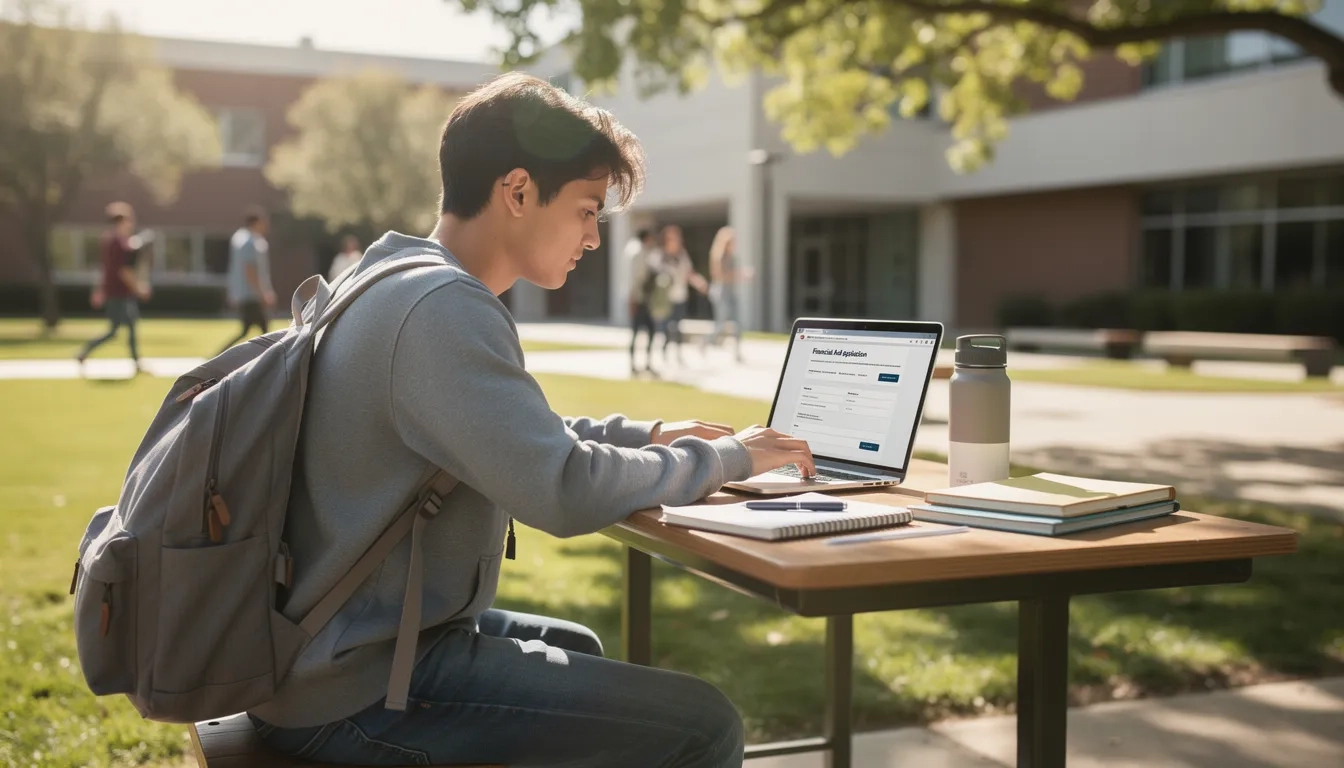
How to Actually Transition from High School to College

The first thing that blindsides most freshmen isn't the coursework or the roommate situation. It's the silence. In high school, someone always knew where you were — first period, second period, lunch. In college, you can go from Monday morning with nothing on your schedule until Wednesday afternoon. That gap doesn't feel like freedom at first. It feels disorienting.
About 62.8% of 2024 high school graduates enrolled in college that same fall, according to the Bureau of Labor Statistics. Nearly two million people made that leap in a single year. Most thought they were ready. A lot weren't — at least not for the parts that actually matter.
The Structural Shock Nobody Warns You About
High school fills 30 hours of your week with mandatory class time. College fills maybe 12 to 16. According to King's College's breakdown of the differences, where teachers "carefully monitor class attendance," professors treat you as an adult who chose to show up or not.
Suddenly you have 15 extra hours a week with zero external accountability. No one checks that you did the reading. No one follows up on a missed assignment.
That gap is where most freshmen lose their first semester.
The CollegeData survey of students who'd already been through freshman year found that 46% identified academics as their single biggest struggle — not social life, not roommates, not homesickness. The academic shock was the dominant one, and most of it came down to that invisible scaffolding disappearing overnight.
The mistake isn't laziness. It's calibration. Students who coasted in high school by studying around two hours a week suddenly need to study two to three hours for every hour they're in class. If you're carrying 15 credits, that's potentially 30 to 45 hours of outside studying per week. Nobody does the math before they get there. And by week four, the gap between expectation and reality becomes impossible to ignore.
What "Academic Rigor" Actually Means
College doesn't just require more work. It requires different thinking.
High school tests what you've memorized. College tests what you can do with what you've learned. A professor isn't grading whether you know a definition — they're grading whether you can apply it, question it, connect it to something you read three weeks ago.
Grading structures reinforce this shift. Where high school has weekly quizzes and homework check-ins, many college courses reduce everything to a midterm, a final, and one major paper. Each worth 25 to 35 percent of your grade. You can feel completely on track in week six and be completely lost by week ten with no warning.
Sara Sullivan, a Brown University senior who wrote about this for BeyondBookSmart, put it plainly: "saving everything until the last minute was going to have far more consequences in college." That's not just a warning about procrastination — it's about how the grading calendar actively hides problems until it's nearly too late to fix them.
A student writing for Johns Hopkins Admissions described a telling approach: she stopped applying one universal study method across all her courses. Flashcards for social psychology. Thorough chapter reading for sociology. Problem sets for physics. No overlap, no shared system. Each course demanded its own approach, and recognizing that was the actual shift.
The transition isn't from less work to more work. It's from one-size-fits-all studying to course-specific strategies that require you to know how you actually learn.
Building Time Management Before You Need It
The CollegeData survey asked students which life skill they were least prepared for. Time management won clearly — 31% named it as the most essential skill they wished they'd developed before arriving. Second place was money management at 20%. Social skills didn't even make the top three.
Here's a concrete system that works for most freshmen:
- Block your calendar at the start of each week, not each day. Look at the full week, assign study blocks for each course, and treat them like scheduled classes you can't miss.
- Set personal deadlines 48 hours before real deadlines. A paper due Friday isn't due Friday in your calendar — it's due Wednesday. That buffer absorbs the unexpected.
- Identify your peak focus window and protect it. Some people think clearly from 8am to noon. Others hit their stride at 10pm. Using that window for your hardest work, not your easiest, makes a measurable difference.
- Do a weekly review on Sunday evenings. Fifteen minutes to survey what's coming in the next seven days prevents the "I forgot we had an exam" moment that quietly destroys first-semester GPAs.
The biggest mistake is building your time management system after you've already fallen behind. Build it during orientation week, when you have no assignments yet. That's the only time you'll have the mental bandwidth to do it right.
The Money Reality
This is the conversation most families have badly, if at all.
Fifteen percent of freshmen run out of money during their first year. That's from the CollegeData survey — not a hypothetical. Another 35% used credit cards during the year, primarily for groceries and gas, not luxuries. The Hope Center's 2024 national survey found that 59% of students have considered dropping out due to money issues.
That number sounds dramatic until you see how fast small costs accumulate. Textbooks alone can run $400 a semester. Add laundry, toiletries, the occasional off-campus meal, and the software subscriptions certain courses require, and a workable-looking annual budget starts leaking in a dozen places at once.
| Financial Skill | Why It Matters in College |
|---|---|
| Budgeting weekly, not monthly | Aid disbursements come once per semester — you need to make them last |
| Separating wants from needs | 31% of surveyed students cited this as how they stayed financially stable |
| Knowing your aid package details | 51% of students used the financial aid office; it exists for questions, not just forms |
| Avoiding credit card dependency | Freshmen using cards for groceries often graduate with unplanned balances |
| Tracking recurring subscriptions | Small monthly charges are the quiet budget killers nobody notices until February |
Practice managing money before you go. Open a checking account. Give yourself a weekly allowance from your summer job earnings and stick to it for 30 days before school starts. If you can't do it at home with a safety net, you won't suddenly do it in college without one.
Social Life, Mental Health, and Not Going It Alone
Here's something that surprises most people: social adjustment is actually not the hardest part. Only 9% of students in the CollegeData survey said they struggled with social aspects — meeting people, roommates, living away from home. The worrying you're doing about whether you'll make friends? Most people figure that out. The academic and financial stumbles are where the real damage happens.
That said — don't ignore mental health signals.
The Healthy Minds Study covering 2024-2025, drawing data from over 96,000 students across 135 U.S. institutions, found that 32% of college students experience moderate-to-severe anxiety, and 22% report severe depression. Mental health conditions statistically tend to first emerge between ages 18 and 25, which maps almost exactly onto the college years.
Getting ahead of this doesn't mean assuming the worst. It means knowing where your campus counseling center is before you need it, not the day you need it. It means keeping one or two grounding habits from high school — a sport, a creative outlet, anything. The BeyondBookSmart piece made this point well: it's only when you've abandoned those habits entirely that you realize how much they were doing for you.
A few other things that genuinely move the needle:
- Visit office hours once in the first two weeks. Not because you need help yet — because professors remember the students who show up early, and that relationship matters when you do need help later.
- Find one club or organization in week one. Not ten. One. That's enough to build a social anchor without overcommitting.
- Use the career services office before junior year. Freshmen who build professional networks early aren't scrambling at the end.
The Identity Shift Nobody Talks About
A lot of incoming freshmen were the "smart kid" at their high school. The one teachers praised, who didn't study much, who things just came easily to. College collects these students from thousands of high schools and puts them all in the same room.
That recalibration can be brutal if you're not ready for it.
NCES data shows that 45% of high school completers enrolled in four-year institutions in 2022 — the most selective academic environment the system creates. By definition, the average performance level in those classrooms is high. Being average there is not a failure. But feeling suddenly average after years of being exceptional can shake a student's confidence in ways that are easy to dismiss and hard to recover from mid-semester.
My take: reframe the metric before you arrive. Stop measuring yourself against what you were in high school and start measuring yourself against what you're becoming. The question isn't "am I still one of the smart ones?" The question is "do I understand this better than I did last week?" That shift alone prevents more second-semester crises than any study guide.
Students who thrive in the first year aren't always the most academically prepared. They're the ones who stay curious, ask for help early, and refuse to let one bad midterm rewrite their entire self-assessment.
Bottom Line
- Build your time management system during orientation week, not after the first bad grade. Weekly calendar blocking, personal deadlines 48 hours ahead of actual ones, and a Sunday review habit are the core of it.
- Academics, not social life, is the biggest transition challenge. Study each course differently; what worked in high school was designed for a different type of test.
- Practice managing money before you arrive. Run a real weekly budget from your summer income. Fifteen percent of freshmen run out of money in year one — it's preventable.
- Know where campus mental health resources are before you need them. With 32% of students experiencing significant anxiety, the counseling center is a resource, not a last resort.
- The single most important shift: this is a transition from external accountability to internal accountability. Nobody will chase you down. Build the systems that replace the scaffolding you're leaving behind.
Frequently Asked Questions
How different is college studying compared to high school?
The difference is bigger than most students expect. High school studying averages about 2 hours per week nationally; college typically requires 2 to 3 hours of studying for every hour spent in class. More importantly, the type of studying shifts from memorization to analysis and synthesis. Different courses demand entirely different strategies — the Johns Hopkins approach of using flashcards for one class and problem sets for another is a useful model.
Is it normal to feel lost during the first semester of college?
Yes, and it's far more common than the social media version of college suggests. The CollegeData survey found that 25% of students felt disappointed with their college experience occasionally or often. Feeling disoriented in the first few months doesn't mean you made the wrong choice — it usually means the adjustment is still in progress and hasn't finished yet.
What's the biggest myth about the high school to college transition?
That social life is the hardest part. Most incoming freshmen spend their energy worrying about making friends and fitting in. In practice, only 9% of surveyed students said social adjustment was their main struggle. Academic preparation (46%) and financial management (20%) are where students actually stumble. Redirect your preparation energy accordingly.
When should I start using campus resources like office hours or tutoring?
Week one, not week nine. Students who visit a professor's office hours in the first two weeks get remembered and receive better access to guidance later. The CollegeData survey found that 50% of students use professor office hours — but the ones who start early get the most out of it. The same logic applies to tutoring centers and counseling services: know where they are before you need them.
How do I manage money in college if I've never budgeted before?
Start at least 30 days before you arrive. Open a checking account, set a weekly spending limit from your summer earnings, and actually live within it. In college, financial aid arrives in lump sums once or twice per semester — without a weekly budget framework already in place, that money disappears faster than you'd think. A simple spreadsheet or a free app works fine. The tool matters less than the habit.
What should I do if I'm struggling academically in the first few weeks?
Go to office hours immediately — not the day before the exam. Professors who see you early can help you recalibrate your approach before it becomes a permanent grade problem. Also check whether your campus has a writing center, tutoring center, or peer study programs. The CollegeData survey found study groups were used by 37% of students and ranked among the most helpful resources available to freshmen.
Sources
- Transition to College: Survey Results | CollegeData
- Fast Facts: Immediate Transition to College | NCES
- High School vs. College: How My Study Habits Have Evolved | Johns Hopkins University
- How is College Different from High School? | King's College
- 4 Tips for the High School to College Transition | BeyondBookSmart
- College Enrollment and Work Activity of Recent High School Graduates | BLS