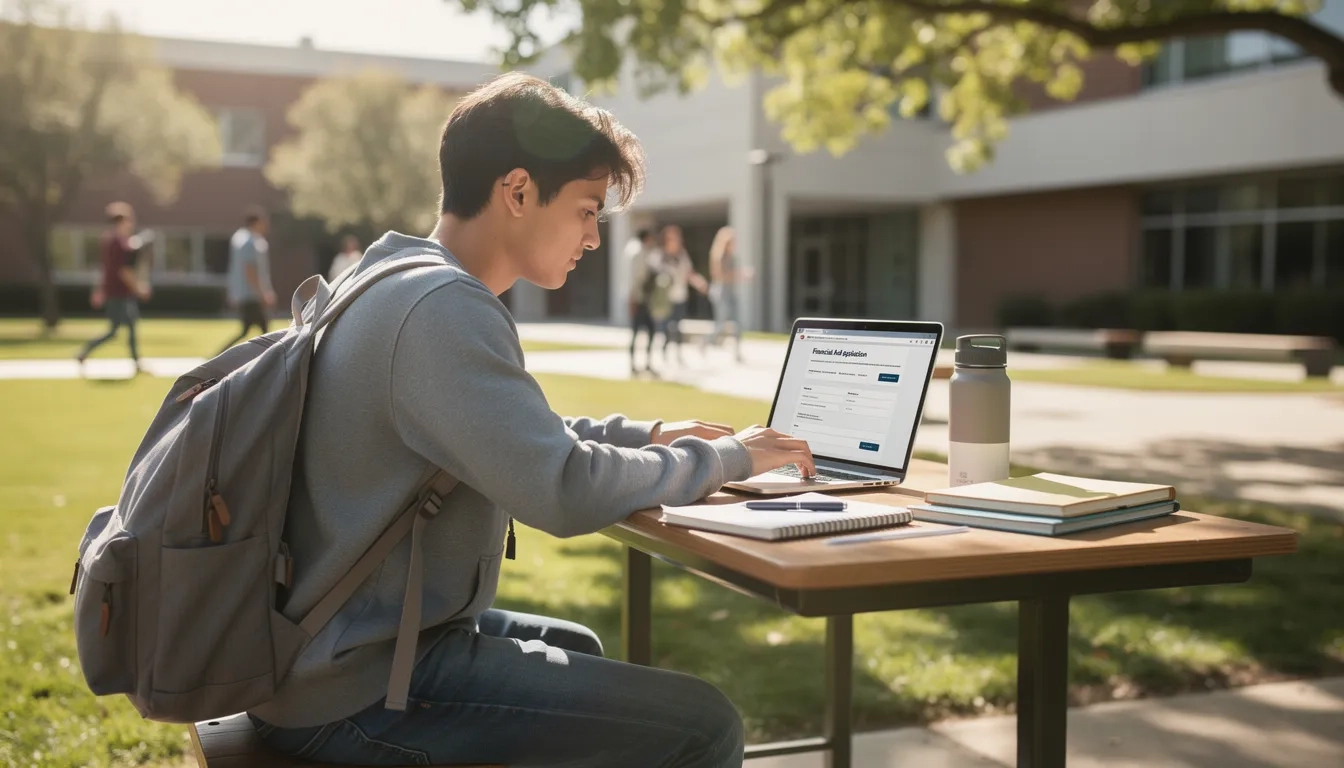
How to Handle Academic Stress: What the Research Actually Shows

Around 78% of college students reported moderate or high stress in the last 30 days, according to the American College Health Association's Fall 2024 national survey of over 33,000 undergraduates. That's not an outlier semester. That's the baseline. What's stranger is the response: roughly 35% of those students accessed mental health services, meaning the majority are managing the most pressurized years of their lives mostly by improvising. This article exists to make that less true.
Why Academic Stress Hits Differently Than Other Kinds of Pressure
Academic stress is distinct because it compounds fast. You're not just stressed about one exam — you're stressed about what the exam means for your GPA, what the GPA means for your future, whether you're in the right major, whether you're cut out for any of this. The threat isn't localized. It spreads.
The body responds to academic stress as though it were a physical threat. Repeated sympathetic nervous system activation floods the body with cortisol and adrenaline. Short-term, that sharpens attention. Sustained over weeks or months (the kind of daily pressure that doesn't get reset by a single weekend), it produces chronic fatigue, disrupted sleep, persistent headaches, and gastrointestinal problems. Students don't burn out because they're fragile; they burn out because the machinery runs too long without recovery.
A genuinely counterintuitive finding: stress doesn't peak when you'd expect. A 2022 PMC study of 843 college students found that second-year students — not freshmen — carried the highest academic burden and reported the lowest psychological well-being across all undergraduate years. Freshman orientation programs cushion the initial transition. Nobody designs anything to cushion sophomore year, when coursework accelerates and the social scaffolding of new-student programs has already dissolved.
The Chain That Turns Stress Into Burnout
There's a gap between "stressed" and "burned out," and it matters.
Stress is a response to demand — it can even sharpen performance when it's manageable. Burnout is something else: a chronic state of emotional exhaustion, detachment, and a persistent sense that effort no longer connects to outcome. A 2025 longitudinal study published in Frontiers in Psychology, tracking 428 university students, mapped out what researchers call the stress-burnout cascade: stress weakens perceived social support, which then erodes self-esteem, which accelerates burnout. It's not a direct hit — it's a chain.
This matters because you can interrupt the process at multiple points without eliminating stress entirely. The study identified two key buffers: external resources (social connections with friends, family, and peers) and internal resources (self-esteem and sense of competence). When both erode simultaneously, burnout accelerates dramatically.
Warning signs you're crossing from stressed into burned out:
- Emotional exhaustion that doesn't lift after a full night of sleep
- Cynicism about your coursework, professors, or chosen field
- Feeling ineffective even when you're putting in genuine hours
- Repeated social withdrawal — canceling plans not because you're busy, but because you simply don't care anymore
Three of those four describing your last month is a meaningful signal, not routine exam-week fatigue.
What Controlled Research Actually Shows Works
A lot of stress advice sounds plausible and has no rigorous support. Let's skip that.
Cognitive Behavioral Therapy (CBT)
CBT has the strongest and most consistent evidence base for academic stress reduction. A 2025 BMC Medical Education study enrolled 483 students from two Nigerian universities in a 14-week CBT combined with mindfulness-based stress reduction (MBSR) program — 120-minute weekly sessions. Test anxiety scores in the treatment group dropped from 241.44 to 43.87. The control group stayed flat at roughly 240. Academic achievement scores among treated students climbed from 47.15 to 77.02 — and two-month follow-up assessments showed the improvements held.
CBT targets the cognition underneath the emotion. A student who believes "failing this exam means I'm worthless" experiences significantly more stress than one who thinks "this is genuinely hard and I may struggle." The reframe isn't denial — it's accuracy. One thought is catastrophizing; the other is just true.
Mindfulness-Based Interventions
A 2025 randomized controlled trial in Frontiers in Psychology tested an 8-week mindfulness program on university students specifically during exam periods. The mindfulness group showed reduced academic stress and burnout plus gains in psychological resilience. Secondary benefits included better sleep quality, improved concentration, and measurable reductions in procrastination.
Mindfulness is not about becoming serene. It's about observing your thoughts without being pulled underwater by them. For a student spiraling at midnight before an organic chemistry exam, a 10-minute body scan practice doesn't erase the pressure — but it interrupts the catastrophic thought loop long enough to get sleep, which improves the next morning's performance substantially.
Social Support
The 2025 Frontiers longitudinal study found that social connection buffered the stress-burnout chain through two separate pathways: a direct protective effect against burnout, and an indirect one through preserving self-esteem. Students who kept their social connections intact during high-stress periods showed meaningfully slower burnout development.
Most students do the opposite. They cancel plans to study more. The isolation feels like productive sacrifice. It's actually self-sabotage.
A Practical Framework: Triage, Recovery, Prevention
Most stress advice operates only at the crisis level — tips for when you're already drowning. What works is a layered system you can run before, during, and after high-pressure periods.
| Layer | When to use | Core tactics |
|---|---|---|
| Triage | Crisis — exam in 48 hours | Pomodoro blocks (25 min on/5 off), single-task focus, 4-7-8 breathing |
| Recovery | After an intense stretch | 7+ hours sleep, social reconnection, physical movement |
| Prevention | Normal weeks, baseline level | Weekly planning sessions, study skill development, proactive mental health check-ins |
Weekly planning alone shifts stress outcomes significantly. Spending roughly 37 minutes on Sunday mapping out the coming week reduces mid-week anxiety because it replaces uncertainty — a primary driver of anxious rumination — with a coherent picture of what's actually ahead. The psychological mechanism isn't just organization; it's reducing the cognitive load of constant re-prioritization.
Prevention is where students leave the most on the table. Maintaining equilibrium takes far less effort than clawing back from burnout. By the time most students implement a stress management approach, they're already in triage.
Mistakes That Make Academic Stress Significantly Worse
Knowing what aggravates stress is as useful as knowing what helps.
All-nighters are a trap. Sleep deprivation elevates cortisol and impairs the prefrontal cortex — the exact brain region you need for recall, analysis, and written argumentation. A student who sleeps 8 hours and studies 6 consistently outperforms one who sleeps 5 and studies 9. The math isn't intuitive, but the neuroscience is settled. Cutting sleep to add study hours is borrowing against the performance you're trying to protect.
Treating every task as equally urgent keeps cortisol elevated throughout the day, full stop. The Eisenhower matrix — sorting tasks by actual urgency versus importance — isn't a productivity gimmick. It's a way of telling your nervous system that not everything is a fire. Moving low-stakes tasks off the immediate radar is stress relief in practical form.
Waiting too long to ask for help. The ACHA's Fall 2024 data shows 35.2% of students accessed mental health services — real progress over prior years. But that still leaves nearly two-thirds of a heavily stressed population trying to self-manage indefinitely. Campus counseling centers, peer support programs, and telehealth options exist because self-help has real ceilings.
A quick diagnostic before things escalate:
- When did you last have a conversation about how you're doing — not about coursework, but about you?
- Are you sleeping before midnight at least 4 nights per week?
- Do you have one hour this week that's genuinely unscheduled and protected?
How to Support Someone Else Under Academic Stress
Academic stress rarely stays contained to the person experiencing it. It radiates outward to roommates, partners, parents, and close friends.
Practical support beats sympathy. The research on social buffering shows that "emotional support and positive feedback" from close relationships directly protect self-esteem erosion under stress. Concretely: saying "you're doing great, don't worry" dismisses the experience. Instead, ask "what would actually help right now?" and then do that specific thing — bring food, sit nearby while they work, review flashcards.
The most protective thing someone in your orbit can do isn't to find the right words. It's to show up consistently enough that the stressed person doesn't feel alone in it.
Know when peer support has hit its ceiling, though. The American Foundation for Suicide Prevention reports serious suicidal ideation among college students has climbed to 13%. Sustained withdrawal lasting more than two weeks, statements of hopelessness that extend beyond school itself, and increased substance use are signs that the situation needs professional attention — not better words from a friend. Taking dark statements seriously rather than assuming they're just venting is not overreacting.
Bottom Line
My honest take: powering through academic stress on willpower alone is a strategy with a poor track record, and most students know this even while doing it. The research is clear on what actually works.
- Protect the chain's weak points. The stress-to-burnout path runs through social disconnection and self-esteem erosion. Guard your relationships even when you think you can't afford to.
- Use tools that have evidence. CBT and mindfulness-based programs have randomized controlled trial support with large effect sizes. "Try harder" does not.
- Build prevention into normal weeks, not just crisis response into exam week — this is where the real leverage lives.
- Ask for help before you hit empty. Campus counseling centers and telehealth options exist for exactly this. Using them is not defeat. It's how adults manage real workloads.
Stress is a signal that something needs adjusting — your system, your workload, your sleep, your support network. Respond to the signal.
Frequently Asked Questions
Is it normal to feel stressed about school even when grades are fine?
Yes — and this surprises a lot of students. High achievers often experience what researchers describe as academic pressure without academic failure: performance stays strong while stress levels rival students who are genuinely struggling. The driver is usually perfectionism or fear of slipping, not actual difficulty. Stress and grades are correlated, but the relationship is messier than most people assume.
What's the actual difference between academic stress and academic burnout?
Stress is a response to demand — it's temporary and can improve focus when it's at manageable levels. Burnout is a chronic state defined by emotional exhaustion, detachment from your work, and a persistent sense of ineffectiveness regardless of effort. Stress is the sprint; burnout is what happens when the sprint has no finish line. The 2025 Frontiers in Psychology longitudinal study found burnout develops gradually through a chain of resource depletion, which is exactly why catching it early matters more than most students realize.
Does mindfulness actually work, or is it just trendy?
The evidence is considerably stronger than the trend suggests. A 2025 randomized controlled trial in Frontiers in Psychology specifically tested mindfulness during exam periods against academic stress and burnout and found statistically significant improvements in resilience, stress levels, and sleep quality. The barrier is that most students abandon the practice before effects consolidate — which typically requires 4 to 8 consistent weeks of practice. Trying it once during finals week and declaring it useless is like doing one physical therapy session and concluding PT doesn't work.
Why do sophomore students struggle more than freshmen?
Second-year students face a specific convergence of pressures: coursework gets substantially harder, the built-in social scaffolding of freshman year disappears, and many students are simultaneously confronting whether their original major actually fits. A 2022 PMC study of 843 college students found sophomores had the highest academic burden and the worst psychological well-being of any undergraduate group. It's a known, documented trough. Knowing it exists and expecting it makes it considerably easier to navigate.
I genuinely have too much to do. How do I manage stress when the workload is the actual problem?
This is where standard time-management advice fails most students — sometimes the load is objectively unsustainable, not just poorly organized. Start by separating tasks with real consequences from tasks with perceived urgency. Then consider a direct conversation with a professor or advisor: asking for a deadline extension or acknowledging you're overwhelmed is not failure. It's how functioning adults handle real workloads. Professors have seen this before and most respond better than students expect.
Can academic stress cause physical health problems?
Yes, and faster than most students expect. Chronic activation of the stress response repeatedly elevates cortisol over sustained periods. Documented physical effects include disrupted sleep architecture, gastrointestinal distress, suppressed immune function, and persistent headaches. Students noticing physical symptoms alongside emotional stress should treat this as meaningful data — it's the body flagging that cognitive coping strategies alone may not be sufficient at that load level.
Sources
- ACHA Fall 2024 National College Health Assessment
- Stress and Academic Burnout in College Students — Frontiers in Psychology 2025
- RCT of Mindfulness: Academic Stress, Burnout, and Resilience — Frontiers in Psychology 2025
- CBT and MBSR Impact on Test Anxiety and Academic Achievement — BMC Medical Education 2025
- Academic Stress and Mental Well-Being in College Students — PMC
- Stress Management Intervention for High School Students Before Final Exams — Frontiers in Education 2025