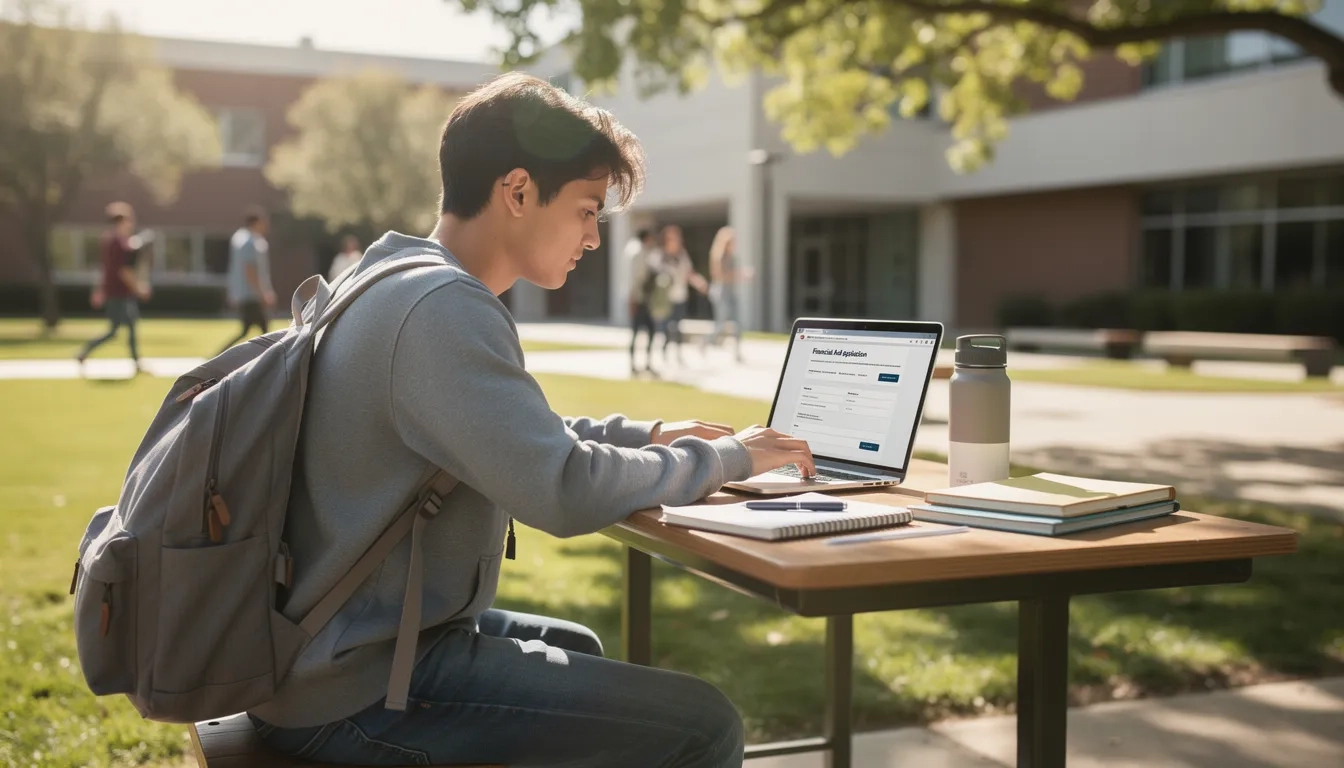
Online Degree vs. On-Campus Degree: What Employers Actually Think

Back in 2012, if you put "Online University" on your resume, you were essentially signaling that you couldn't get in anywhere else. Hiring managers would clock it, say nothing, and quietly move to the next candidate. That particular reflex is mostly gone now—but what replaced it is more complicated than people expect.
The Old Stigma and Why It Moved
For years, "online degree" was code for two things: for-profit diploma mills and students who lacked the grades for a real university. That reputation wasn't entirely unfair. The early 2010s brought a wave of high-profile scandals—ITT Technical Institute, Corinthian Colleges, and the University of Phoenix all faced federal investigations, leaving hundreds of thousands of students with credentials employers wouldn't touch.
The COVID-19 pandemic broke this mental model faster than a decade of advocacy could have. When residential universities like MIT, Georgetown, and Michigan flipped overnight to Zoom-based instruction in spring 2020, employers watched their best recruits finish entire semesters online. The idea that online delivery was inherently inferior became very hard to defend when the alternative was an empty campus.
By 2024, according to NACE's Job Outlook survey, 87.4% of employers who track their new hires' degree modality had already hired at least one graduate with an online degree. Not "open to hiring." Already had. And nearly two-thirds of those same employers now use skills-based hiring practices for entry-level roles, meaning the format of a degree matters less than what the candidate can actually do.
The stigma didn't disappear. It relocated. Today it attaches to specific institutions and program types, not to the delivery format itself. Which means "do employers respect online degrees?" is now the wrong question. The right one is: "do employers respect this online degree, from this school, in this field?"
What Hiring Managers Actually Check
When your resume lands in front of a recruiter, the evaluation is faster and less deliberate than most candidates imagine. Name of degree. Name of school. Maybe graduation year.
They're not checking whether you sat in a classroom or attended via browser. They're checking if the school name triggers something—positive recognition, negative associations, or a blank.
Research from Northeastern University puts the dynamic plainly:
"An institution's brand and reputation is the main driver of a credential's value, regardless of whether or not it was earned online."
The numbers bear this out in a stark way. 83% of business leaders view online credentials from well-known institutions as equivalent to on-campus degrees. But only 42% would consider candidates holding degrees from exclusively online universities with no physical campus at all. That 41-point gap isn't about delivery format. It's about brand trust and institutional recognition.
A degree from Georgia Tech Online reads as "Georgia Tech" in a hiring manager's brain. A degree from an institution they've never encountered—regardless of whether it technically has a physical building somewhere—gets far more scrutiny, and often gets passed over before the candidate ever has a chance to explain the program's rigor.
Why Accreditation and Reputation Trump Everything
Regional accreditation is the floor, not the ceiling. Without it, a degree rarely survives initial resume screening at large employers. Bodies like the Higher Learning Commission (HLC) or the Southern Association of Colleges and Schools Commission on Colleges (SACSCOC) are what hiring managers use—consciously or not—as their baseline for "is this a real school?" About 82% of employers prefer candidates from regionally accredited institutions over those with national accreditation, which has historically been associated with for-profit schools.
Geography shapes perception more than most candidates realize. The GMAC 2025 Corporate Recruiters Survey polled 1,108 hiring managers from staffing firms across 46 countries (64% of which were Fortune 500 companies). In tech-heavy hubs across Europe, Central Asia, and East Asia, nearly 90% of employers viewed online and in-person degrees as equally valuable. U.S. employers were measurably more conservative—only 57% of tech recruiters in the same survey placed equal value on both formats.
That transatlantic gap tells you something real about cultural context. American hiring culture carries residual skepticism toward online credentials, particularly outside of technology. In markets where credentials were always less fetishized and skills always mattered more, the format question barely registers.
The institutional prestige hierarchy is also more forgiving at the graduate level. An online master's from a recognized university is essentially indistinguishable from its residential counterpart in most hiring pipelines. The accreditation and brand do the heavy lifting. At the undergraduate level, especially from less-established schools, the format still occasionally raises eyebrows.
How Industry Changes the Picture
"Employer perception" isn't a monolithic variable. It splits dramatically by sector.
| Industry | Online Degree Acceptance | Primary Reason |
|---|---|---|
| Software / Technology | High | Output is verifiable; skills matter most |
| Business / MBA | High | Graduate programs led the online shift |
| Data Science | High | GitHub and portfolio outweigh delivery format |
| Education / Teaching | Moderate | State licensure boards vary widely |
| Healthcare / Nursing | Low-Moderate | Clinical hours legally required; hybrid preferred |
| Law | Low-Moderate | ABA only approved fully online JDs in 2023 |
| Chemical / Mechanical Engineering | Low | Lab requirements can't be replicated online |
Law is worth unpacking. The American Bar Association permitted fully online JD programs for the first time in 2023, and many state bar associations are still figuring out how to evaluate those applicants. Employers in legal hiring are watching, but the track record is too short to generate widespread confidence among law firms or corporate legal departments.
Healthcare presents a different constraint: hands-on clinical requirements exist for regulatory reasons, not just cultural preference. An online nursing degree almost always includes in-person clinical rotations built in, making it hybrid by nature. The online vs. campus debate largely dissolves at that point—the requirement for physical presence is just baked into the credential.
The Hidden Signal Some Online Graduates Send
This is the elephant in the room in the online-vs-campus debate. A meta-analysis from the U.S. Department of Education covering 51 separate studies found that students learning online "performed modestly better, on average, than those learning the same material through traditional face-to-face instruction." The researchers noted the effect held across a wide range of content areas and learner demographics.
Online learning doesn't make anyone smarter. But it does select for certain traits.
SHRM (Society for Human Resource Management) research found that approximately 60% of HR leaders perceive candidates who completed degrees while working full-time as having higher-than-average maturity and time-management skills. The person who earned a degree between 9pm and midnight after a full work day is demonstrating something a 20-year-old in a dorm room with few competing demands simply isn't. Savvy hiring managers pick up on this, especially when they're evaluating candidates for roles that require independent judgment and self-direction.
But this comparison has a real asymmetry that's worth being honest about. Traditional residential degrees bundle the credential with four years of professional infrastructure: on-campus recruiting events, research assistant positions, study group culture, career fairs, and alumni introductions into specific industries. Online programs strip most of that out.
For a first-generation student with no professional network, that missing infrastructure is a practical cost, not just a perception issue. The degree is only part of what employers are evaluating when they hire a new graduate. The question is whether a candidate has also built the professional relationships and experience that residential students accumulate somewhat automatically.
How to Compete If You Have an Online Degree
Here's my take: for most people in most industries, an accredited online degree from a reputable institution is roughly equivalent to its on-campus counterpart in employer perception. The old "online equals lesser" reflex has mostly died. What remains is institutional reputation doing the sorting work that format used to do.
That said, "roughly equivalent" still leaves room to sharpen your position.
If you're choosing a program now:
- Verify regional accreditation before anything else. This is not optional.
- Search "[school name] online degree employer recognition" and look for named corporate recruiting partnerships, not just rankings.
- Ask admissions directly: do online students have access to the same career services as residential students? Many schools (this is the part worth checking before you commit, not after) quietly exclude online students from on-campus recruiting fairs.
- Research your specific industry's norms. Targeting software engineering? Online works fine. Targeting clinical healthcare or law? Confirm exactly what in-person requirements are bundled into the program before enrolling.
If you've already finished an online degree:
- Lead with relevant certifications and demonstrated skills alongside your degree line, especially if the school has limited brand recognition in your market.
- Build the professional network that residential students get more or less automatically: industry conferences, professional associations like SHRM or PMI, LinkedIn communities, and active alumni groups.
- For graduate degrees specifically, lean into the GMAC data when it comes up in conversations: comparable job placement rates and starting salaries for online MBA graduates from recognized business schools are documented, not anecdotal.
Don't spend energy being defensive about the format. Most hiring managers genuinely don't care. The ones who do are usually working from assumptions formed a decade ago, and confident competence moves past that faster than any explanation.
Bottom Line
The employer perception gap between online and on-campus degrees is real but narrowing fast—and it's far less about delivery format than most candidates assume.
- Accreditation is the hard requirement. Regional accreditation from a recognized body is non-negotiable. It's where the evaluation starts, not ends.
- Institutional brand does the heavy lifting. An online degree from a recognized university with an established name carries more weight than a traditional degree from an unrecognized school.
- Industry context changes everything. Technology and business have largely moved past the debate. Healthcare and law have not, for structural reasons more than cultural ones.
- Supplement the credential with what residential programs bundle in naturally: professional networking, certifications, internships, and active participation in industry associations.
- Graduate degrees are safer than undergrad. The online/campus perception gap narrows significantly for master's and MBA programs at established, accredited schools.
The single most important move any prospective student can make is researching the specific school, accreditation status, and industry norms before enrolling—not after the tuition is paid.
Frequently Asked Questions
Do employers check whether your degree was earned online?
Most don't, unless the institution name is unfamiliar or something else raises a question. Hiring managers typically check the degree level and school name, not delivery format. What triggers additional scrutiny is an unrecognized institution—not the word "online" appearing anywhere on a resume.
Does it matter if the school also offers an on-campus program?
Yes, and the gap is significant. According to Northeastern University employer research, 92% of employers view online degrees favorably when the school also offers an equivalent on-campus program. That number drops to 42% for institutions that exist entirely online with no physical campus. Schools with residential programs carry brand trust that pure-play online institutions haven't had enough time or history to establish.
Are online MBA programs taken seriously by employers?
At accredited business schools, yes. The GMAC Corporate Recruiters Survey has consistently documented comparable hiring rates and starting salaries between online and residential MBA graduates from recognized programs. Indiana University's Kelley Direct Online MBA and Carnegie Mellon's Tepper School online options both routinely place graduates at the same firms as their residential counterparts. The key word in all of this is "recognized"—the school's reputation still carries the argument.
Myth vs. reality: is the stigma against online degrees still real in 2025?
Myth: all hiring managers still view online degrees as lesser credentials. Reality: the stigma has migrated from format to institution. Residual skepticism exists among older hiring managers who watched for-profit scandals unfold in the 2010s, but it now concentrates on unrecognized schools, not on online delivery as a category. For accredited programs from established institutions, the broader hiring market has moved on.
What should I look for in an online program to maximize employer credibility?
Prioritize regional accreditation, an established school brand (ideally one with a physical campus), and field-specific rankings or recognition in your target industry. Check directly whether the school has named corporate recruiting partnerships and whether career services extend to online students on equal terms. The strongest signal that an online program is taken seriously by employers is concrete alumni placement data in your specific target industry—not testimonials, not vague claims, but named employers and roles.
Sources
- NACE: Employers See Online Degrees as Comparable to In-person Degrees
- GMAC 2025 Corporate Recruiters Survey Report
- Northeastern University: What Employers Really Think About Your Online Degree
- Do Employers Trust Online Degrees? Here's What the Data Says
- Fortune: Americans Can Get Behind Dropping Degree Requirements