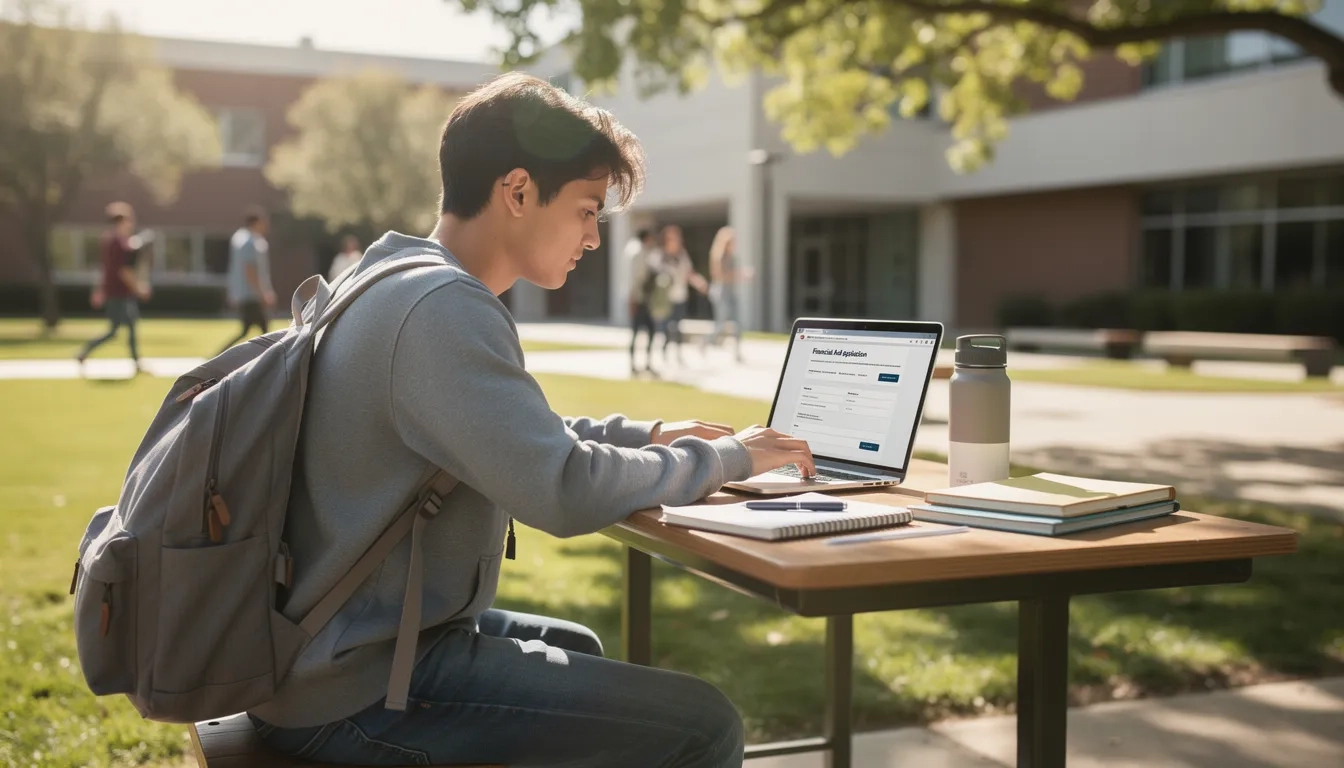
The University Mental Health Waitlist Crisis: Why Students Can't Get Help

The first time a student decides to ask for help, it should feel like relief. She fills out the intake form at the campus counseling center, describes weeks of panic attacks and long stretches of flat numbness between them, and waits. The center calls back. The next available appointment is six to eight weeks out.
Six weeks. That's roughly half a semester.
This is the standard reality at hundreds of universities right now. The 2024-2025 Healthy Minds Study gathered data from more than 96,000 students at 135 U.S. institutions and found that 32% experience moderate-to-severe anxiety and 22% report severe depression. Demand for campus counseling services has climbed 20–30% since 2020. The infrastructure to meet that demand hasn't kept pace. Not even close.
The Numbers Tell a Complicated Story
Most people assume the university mental health crisis is purely a demand story. More students are struggling, more are showing up at counseling centers, centers can't keep up. That picture is incomplete.
The Center for Collegiate Mental Health's survey of 367 counseling center directors, covering the 2023-2024 academic year, tells a more surprising story. At four-year universities, 68% of directors reported a decline or no change in the number of unique clients they saw. Fewer students were walking through the door, not more.
So if demand is leveling off, why do waitlists persist?
Because the supply side is collapsing. Clinical staff turnover at college counseling centers runs around 12% annually. Of therapists who leave, 48% cite low salary as the primary reason and 32% point to poor working conditions. Many are departing for private practice or telehealth platforms that pay better and carry less administrative burden.
The staffing math is unforgiving. The International Association of Counseling Services (IACS) recommends one full-time clinician for every 1,000–1,500 students. Large universities are already straining that ratio. When a therapist leaves and takes three or four months to replace, the waitlist grows not because 300 more students suddenly need help, but because the center is running with 1.5 fewer therapists than it had last fall.
Why the Lines Keep Growing Anyway
Even where overall utilization has dipped, the students who do show up are arriving with more acute needs. According to data cited by Inside Higher Ed, 95% of counseling center directors report rising severity levels in students seeking services.
The students presenting to campus counseling in 2026 look different from those who showed up a decade ago:
- Students with histories of psychiatric hospitalization, arriving for the first time without family support systems nearby
- Those managing eating disorders alongside housing or food insecurity
- Students working 20+ hours per week while carrying full academic loads
- First-generation students with no prior experience navigating mental health care
Same appointment slot, completely different resource demand. A student managing mild test anxiety might resolve things in three sessions. A student carrying a trauma history, chronic financial stress, and active depression might need a year of consistent support. The session count looks the same on an intake form. The clinical reality is not.
Financial pressure sits at the root of a lot of this. FasPsych's 2025 analysis found that 59% of students have seriously considered dropping out due to financial concerns and 23% experience food insecurity. Nearly 80% report that money problems negatively affect their mental health. Add widespread anxiety about AI eliminating entry-level jobs (70% of students report this concern) and the cumulative psychological load these students are carrying starts to make sense.
What Waiting Actually Costs
This is where the abstract becomes concrete.
The IACS has tracked the consequences of waitlists for decades. A study it cites found that waitlisted students showed a 14% higher attrition rate than students who received timely care. Those students didn't leave because they stopped needing help. They left because waiting felt like being told they weren't worth a slot.
The academic stakes are real, too. CCMH data shows that 73% of students who did receive counseling reported improved academic performance, and 71% said counseling helped them stay enrolled. Flip those numbers around: the students sitting on a six-week waitlist aren't getting those outcomes.
When a student in distress waits six weeks for a first appointment, they aren't waiting in neutral. They're missing classes, self-medicating, and in some cases making decisions that are very hard to undo.
And crisis escalates. A student who needed three sessions of supportive counseling in October may need emergency psychiatric intervention by December if the wait stretched long enough. Counseling centers track an average of 125 students per year in formal crisis appointments, but the real population of students in untreated subclinical distress is far larger. The longer someone waits, the more expensive the eventual care.
Why Hiring More Therapists Is the Wrong Instinct
I'll say this plainly: the impulse to throw bodies at this problem is understandable. It's also missing the point.
Even well-funded campuses can't hire their way out of a national shortage. Demand for mental health professionals nationally already exceeds supply by an estimated 250,000 full-time providers. Campus counseling jobs, with their below-market salaries and high session volumes, aren't winning many recruitment competitions against private practice. And even where hiring succeeds, 12% annual turnover means the gains erode constantly.
The model itself needs to change, not just the headcount.
Fifty-three percent of four-year institutions already use third-party telehealth vendors. But CCMH data shows most directors report utilization below expectations. Offering a telehealth option and actually weaving it into the care pathway are two different things. Students don't know to use it if nobody tells them where to look, and the counseling center intake form still routes everyone into the same backed-up queue.
Access alone isn't access. Promotion matters as much as procurement.
What's Actually Working
Here's where the picture gets more hopeful, if you're willing to look at what the evidence supports rather than what's traditional.
Stepped care models are the strongest structural answer. Rather than treating every request as if it requires a recurring individual appointment with a licensed therapist, stepped care matches students to the least resource-intensive level of support that genuinely meets their need. Students with mild stress get a self-guided digital program or a group session. Those with moderate depression get short-term individual therapy. Someone in acute crisis gets immediate escalation. The math works because not everyone needs the most intensive tier, and freeing up those appointments for students who do need them cuts wait times across the board.
Same-day access is another approach gaining ground. Some universities now allow students to walk in for a rapid triage appointment rather than waiting weeks for a first contact. The session might be brief, but it establishes a care relationship, reduces the immediate distress of feeling ignored, and produces a clearer care plan.
Here's how the main models compare:
| Model | How It Works | Best For | Tradeoff |
|---|---|---|---|
| Stepped care | Tiered support matched to severity | Broad campus population | Requires triage infrastructure |
| Same-day access | Walk-in brief triage sessions | First contact, crisis prevention | Limits initial session depth |
| Embedded counselors | Clinicians placed in residence halls, athletics | Reducing stigma, proximity | Expensive; only ~30% adoption |
| Telehealth partnerships | Third-party apps like TimelyCare | After-hours and overflow demand | Underutilized without active promotion |
| Peer support programs | Trained students offering structured support | Destigmatizing help-seeking | Not clinical care; requires oversight |
No single model solves this. Most universities need at least three running simultaneously, with clear pathways connecting them.
Embedded counselors (placed within specific schools, residence halls, or athletics departments) represent a particularly underused option (only about 30% of institutions have deployed them). The logic is straightforward: going to talk to a counselor who already lives in your context feels less clinical than visiting an office across campus. Barriers dissolve when proximity does the work.
Where Policy Fits In
The legislative response is moving, slowly.
The College Students Continuation of Mental Health Care Act, introduced in late 2025, would require virtual mental health coverage for all students enrolled in participating institutions. The intent is right: telehealth could provide the overflow capacity that counseling centers can't staff into existence. But critics have flagged real implementation gaps around technology access and student data privacy, and the bill hasn't cleared committee.
The Bipartisan Safer Communities Act already allocates over $188 million in grants specifically to expand school-based mental health access, including funds to hire and train clinicians. That money is available. The question is whether institutions are applying strategically and deploying it into new models rather than just patching existing ones.
The most stubborn gap isn't funding or political will. It's the absence of a coherent connection between campus counseling and community mental health systems. Most counseling centers cap individual therapy at six sessions before referring students outward. For a first-generation student without prior experience navigating insurance and external providers, that handoff often means falling through the floor entirely.
Bottom Line
The university mental health waitlist crisis is a system failure with distinct fracture points at the staffing, care model, and policy levels. Treating it as a single-cause problem leads to single-cause solutions that don't hold.
If you're a student on a waitlist right now:
- Ask the counseling center specifically about same-day walk-in triage, which many schools offer separately from the standard appointment queue.
- Check whether your school has a telehealth contract. TimelyCare, WellTrack, and SilverCloud are common platforms with shorter access windows.
- The 988 Suicide and Crisis Lifeline (call or text 988) is free, available immediately, and open 24 hours a day.
If you're an administrator or work in higher education policy:
- Adopted telehealth vendors only help if students know they exist. Promotion is not optional.
- Stepped care and same-day access models have the strongest evidence base for extending reach without dramatic hiring increases.
- Treat waitlist length as a tracked institutional metric, the same way you track retention. What gets measured gets addressed.
The student who filled out that intake form and was told "six to eight weeks" deserves a better system. The tools to build one exist. What's missing is the institutional will to stop treating a structural problem like a staffing inconvenience.
Frequently Asked Questions
How long are university mental health center wait times in 2025?
Most campus counseling centers report 6–8 weeks for a first non-emergency individual appointment. That number shifts by institution size, time of year, and staffing levels. Mid-semester periods and the weeks following academic breaks tend to produce the longest waits.
Is it a myth that college mental health is getting worse every year?
Somewhat. The Healthy Minds Study has shown improvement in population-level anxiety and depression rates for three consecutive years. But improvement in averages doesn't resolve the access problem. The students who do seek care are arriving with more severe and complex needs than prior years, and the students who can't get a timely appointment still face the same structural barriers regardless of the trend line.
What should I do if I'm on a waitlist and struggling right now?
Ask the counseling center directly whether they offer same-day triage or walk-in appointments, which operate separately from the standard waitlist at many schools. Check whether your campus provides a telehealth service with shorter wait times. If you're in immediate distress, calling or texting 988 connects you to the Suicide and Crisis Lifeline for free, around the clock.
Why can't universities just hire more therapists to fix this?
Campus counseling jobs compete in a national market where demand already exceeds the supply of licensed mental health providers by an estimated 250,000 full-time positions. Campus salaries are below private practice rates, and 12% of clinical staff turn over annually, meaning hiring gains erode quickly. The underlying model needs to change alongside any increase in headcount.
What is stepped care and does it actually reduce wait times?
Stepped care matches students to the least resource-intensive level of support that genuinely meets their need. Mild stress gets a digital self-guided program or a group session. Moderate depression gets short-term individual therapy. Acute crisis gets immediate escalation. By reserving intensive individual appointments for students who actually need them, stepped care can meaningfully reduce waits without requiring a parallel surge in hiring.
Don't campus counseling centers offer more than just individual therapy?
Yes, and this is probably the most common misconception. Most centers provide crisis counseling with little or no wait, group therapy sessions that begin much sooner than individual appointments, peer support programs, and (at 53% of four-year schools) telehealth partnerships. The multi-week waitlist applies specifically to recurring individual therapy, not to every form of support available. Students who ask specifically about alternatives often find faster paths in.
Sources
- Report: College campus counseling center usage and staffing — Inside Higher Ed
- What's Driving the Student Mental Health Crisis? — Inside Higher Ed
- College Student Anxiety 2025: Crisis & Campus Solutions — FasPsych
- Staff to Student Ratios — IACS
- Ensuring Care on Campus: Inside the College Student Continuation of Mental Health Care Act — The Fulcrum
- College Counseling Utilization Up 30%: Meet the Demand — FasPsych