When to Change Your College Major: A Practical Decision Guide
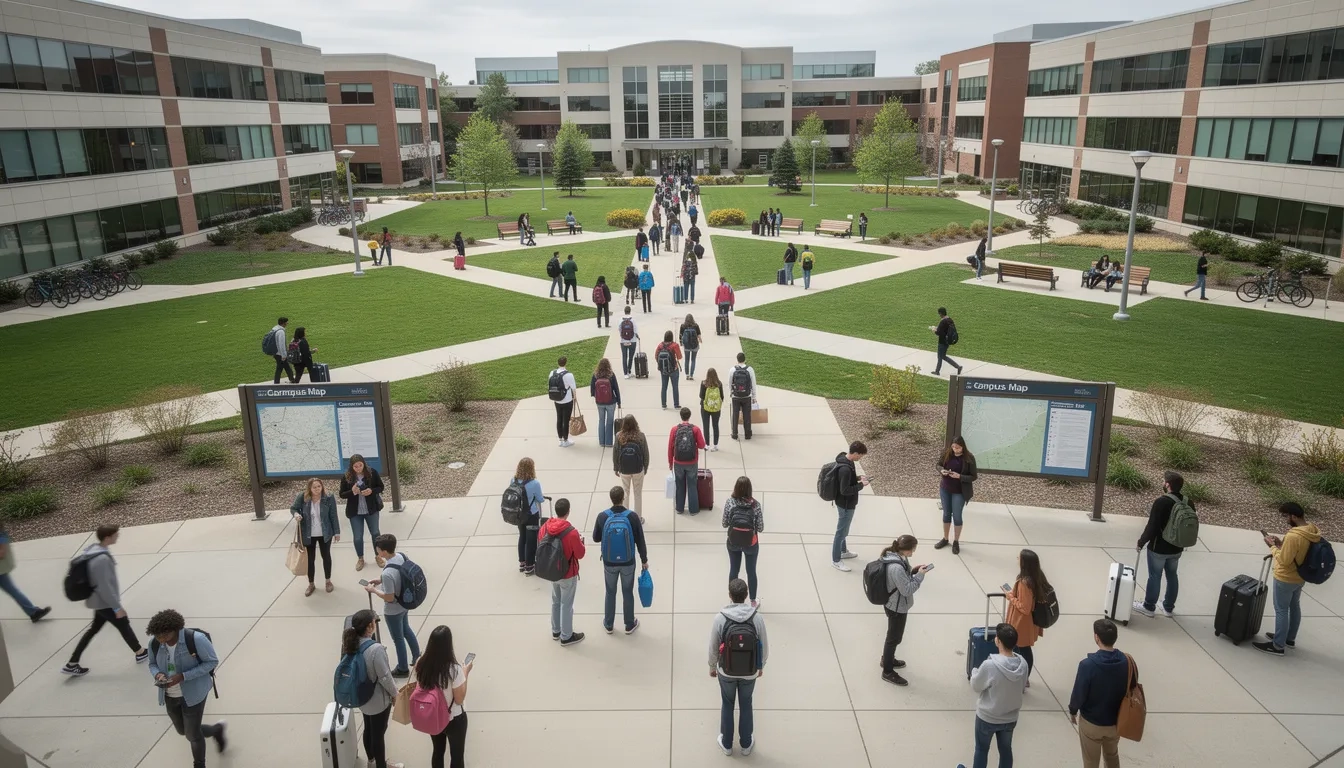
Nearly half of all students who earn a bachelor's degree switch their major at least once before graduating. Not a quarter. Not a third. 47%, according to a Winter 2025 American Academy of Arts and Sciences study that tracked nearly 2 million students from fall 2017 through June 2024. That's a massive number. And yet most conversations about changing your major treat it like an emergency rather than a routine academic decision.
The real question isn't whether switching is normal. It is. The question is when to do it, because the timing gap between "sophomore year" and "second semester junior year" can be the difference between a manageable pivot and an extra $30,000 in tuition.
How Common Is Switching, Really?
The National Center for Education Statistics (NCES) found that 30% of undergrads changed majors within the first three years of enrollment alone. Math majors led at 52%, followed by natural sciences at 40%. Only about 22% of students in applied professional fields made a switch.
But raw percentages hide the part that matters most. Switchers who move early and graduate on time look nothing like switchers who hesitate until junior year and then scramble. The Hechinger Report found that 75% of students who switch in their late junior or senior year take longer than four years to finish — or don't finish at all.
This is the core tension. Switching can absolutely be right. Done late, it's often brutal.
The Signals That Actually Matter
Not every rough semester is a signal to bail. Distinguishing temporary difficulty from genuine incompatibility is the most important judgment call in this whole process.
There are two categories of signals worth separating out:
Switch signals (take seriously):
- You consistently prefer your electives over your major coursework, and you've noticed this across multiple semesters — not just after one bad midterm
- An internship or job shadow revealed that the day-to-day work genuinely repels you (not "harder than expected" — more like "I hated being there")
- Your academic advisor, a departmental professor, or a professional mentor has explicitly suggested exploring other options
- You find yourself energized when reading about a different field in a way that your current major never produces
- The major is affecting your mental health in ways that go beyond normal stress: chronic sleep disruption, avoidance behavior, declining relationships
Pause-before-switching signals (don't overreact):
- One difficult course or one particularly poor professor
- Family or financial pressure toward something "more practical"
- You haven't done a real internship or hands-on project in your field yet
- You're comparing your internal experience to peers who seem more passionate, and assuming something is wrong with you
A 2023 peer-reviewed study in PMC examined 38 college students who had switched majors and found that many left their original programs due to perceived skill gaps — particularly in math, writing, and lab science. But some of those same students later found that confidence was the actual barrier. One participant described "raising the bar for myself" after succeeding in anatomy courses she'd previously written off as beyond her.
Don't confuse a confidence problem with a compatibility problem. They look identical from the inside and require completely different solutions.
The Timing Question
The best time to switch majors is before you've banked too many major-specific credits you can't transfer. The second-best time is right now.
First or second year: switching is almost always low-cost. General education requirements transfer across nearly every department, and you probably haven't accumulated enough upper-division major coursework to create a significant gap.
Start of junior year: it depends on the distance between fields. Switching from sociology to political science? Substantial overlap, probably manageable. Switching from mechanical engineering to art history? You're likely adding at least a semester, possibly more.
Mid-to-late junior year and beyond: the math starts working against you. Every major-specific credit you've already paid for and can't transfer is sunk cost. Every new requirement in the incoming major is an additional charge. This is the zone where financial reality has to carry real weight in your decision.
| Year | Ease of switching | Likely timeline impact | Best approach |
|---|---|---|---|
| Freshman / Sophomore | High | Minimal (0–1 semester) | Switch if signals are clear |
| Start of Junior year | Moderate | 1–2 semesters possible | Meet with advisor first |
| Mid-to-late Junior year | Low | 1–2 extra semesters likely | Consider double major or minor |
| Senior year | Very low | Often 1+ extra year | Explore career pivots instead |
The NCES study found that students already take an average of 15 excess credits — an entire extra semester's worth — beyond what their degree actually requires. Major switching is one of the biggest drivers of that number. Most students don't know this going in.
The Real Financial Cost
An extra semester isn't just a scheduling inconvenience. At a mid-range public university, tuition alone runs roughly $12,000 to $15,000 per year. Factor in room, board, and living costs, and a full extra year comes in somewhere around $25,000 to $35,000 at a public school, and far more at private institutions.
The Hechinger Report profiled real students sitting on $50,000 or more in existing debt who described the prospect of a fifth year as "terrifying." That's not dramatizing. A student named Christopher Bunn, already owing $50,000, calculated that any extended timeline would push him into a financial hole he genuinely couldn't see a way out of.
What most students skip calculating is the credit loss problem. When you switch, previous major credits don't all carry forward. Some satisfy general education requirements. Many just disappear from your degree audit. You paid for them. They're gone from a requirements standpoint.
Three questions to answer before you switch:
- How many credits from your current major transfer into the new one?
- What's the honest, realistic timeline to graduation in the new program?
- What does that additional time actually cost — tuition, living expenses, and delayed income combined?
Book the appointment with your registrar before you decide. Not after. Most students estimate this casually, and they almost always underestimate the real cost.
The Fields That Bleed Students (And the Ones That Absorb Them)
The AMACAD's 2025 study exposed a pattern that doesn't show up in most advice articles: some majors are net exporters of students, while others absorb switchers from all over campus.
Natural sciences shed over 91,000 students across the tracked cohort. Engineering held onto 80% of its starters — the highest retention rate of any major category. General liberal arts held onto just 6% of starters; the rest migrated into more specific fields before graduating.
Behavioral and social sciences were the biggest net gainers. A striking 52% of graduates who ended up in those fields had started somewhere else entirely. Switching into social sciences, psychology, or related programs puts you on a well-worn path. Departments accustomed to high inflow tend to have clearer advising processes for late-joining students.
This matters because switching into a high-absorption field is meaningfully easier than switching into a high-retention one. Engineering programs with rigid sequential structures — where Calc II is a hard prerequisite for everything downstream — are genuinely harder to enter mid-stream than interdisciplinary programs that regularly welcome students from diverse academic backgrounds. Know which type of program you're switching into before you commit.
When You Should Not Switch
Here's where I'll plant a flag: most students who want to switch majors during a rough patch should wait at least one semester before deciding.
Not all of them. Some genuinely need to leave and the signals are clear. But the 2023 PMC study found that the period between majors — what the researchers called the "liminality phase" — is marked by intense anxiety and distorted thinking. When you're miserable in your current major, almost anything else looks better. That's not a reliable baseline for a decision with a $30,000 price tag attached to it.
The same study found that most universities offer almost no structured support during major transitions. Students are essentially on their own: filling out forms, doing self-directed research, and making high-stakes decisions without any structured guidance comparable to what schools provide for first-year students.
Before switching, try a few things first:
- Take one course in the target field before making the switch official
- Talk to students who are one to two years ahead in the potential new major — not just advisors, who have structural incentives to keep you enrolled somewhere
- Do a realistic job search in your target career area to confirm the field is actually hiring for roles you'd want
- Set a defined decision window: "I will decide by end of this semester" rather than sitting in open-ended ambiguity for months
The elephant in the room with major changes is that many students are fleeing discomfort rather than actively pursuing something better. The current major feels urgent and real. The new major is still hypothetical and exciting. That gap in emotional intensity can fool you into a switch you'll regret.
How to Actually Switch Majors
If you've weighed the signals, checked the timing, and run the financial numbers — and you're switching — here's what the process actually looks like at most four-year institutions:
- Meet with your current department's advisor first. Get accurate information about your credit situation. Some advisors will push back; that's fine. Your goal is data, not permission.
- Meet with the receiving department's advisor. Find out exactly which credits count, what new requirements apply, and what a realistic graduation timeline looks like.
- Submit the change-of-major form. At most schools this requires signatures from both departments plus a dean's office sign-off. Budget 2 to 3 weeks for processing.
- Contact financial aid immediately. An extended timeline can affect eligibility for specific grant programs and scholarship renewal requirements. This step is not optional.
- Register for a bridge course. Identify any missing prerequisites in the new major and take the earliest one available that opens the path forward.
The full process, done cleanly and proactively, typically takes 4 to 6 weeks from decision to being officially enrolled in new major coursework. Students who try to shortcut steps 2 and 4 almost always regret it within a semester.
Bottom Line
- Switch early if you're switching. Freshman and sophomore year, the cost is manageable. By mid-junior year, every additional month of delay is cash.
- Trust the internship signal over the classroom signal. One bad professor is noise. Discovering you hate the actual job is data worth acting on.
- Run the real numbers first. How many credits transfer? What's the honest timeline? What does an extra semester cost, fully loaded? Most students skip this and are shocked later.
- Don't mistake anxiety for incompatibility. The in-between period is stressful for almost everyone who switches. Give yourself a defined decision window, talk to people actually working in both fields, and take one class in the new area before going official.
Switching your major isn't failure. 47% of graduates did it. The ones who came out ahead moved deliberately, not reactively, and did the math before they signed the form.
Frequently Asked Questions
How many times can you change your college major?
Most universities impose no hard limit on major changes, but each switch restarts some portion of your credit progress. One change is common and usually survivable; two or more changes compound the timeline and financial costs quickly. If you're considering a second switch, book a meeting with both your advisor and your financial aid office before doing anything else.
Does changing your major look bad on a resume or in job interviews?
For most employers, no. Career trajectories are increasingly non-linear, and few hiring managers scrutinize undergraduate transcripts in any detail. A well-framed explanation — "I switched because I realized X wasn't the right fit and found that Y matched how I actually think" — reads as self-aware, not flaky. The exception is credentialed fields like medicine, certain engineering roles, or licensed professions where specific coursework is a hard prerequisite for the next step.
Is it too late to change your major as a junior?
Not always, but the margin is thin. The critical question is how much credit overlap exists between your current and target major. Switching between closely related fields (say, economics and business administration) at the start of junior year often adds only one extra semester. Switching across disciplines with little overlap — engineering to fine arts, for example — typically adds a full year or more. Get the actual numbers from your registrar before deciding.
Myth vs. reality: Will changing your major definitely delay graduation?
Myth. Changing majors does not automatically extend your time in school — it depends on when you switch and how much credit overlap exists between programs. The NCES found that students who switch early (first or second year) can often still graduate within four years. The Hechinger Report's data showing extended timelines applies primarily to late-stage switchers, not early ones. Timing matters more than the act of switching itself.
What's the difference between switching majors and adding a minor?
Switching your major replaces your primary field of study and rewires your entire course plan. Adding a minor keeps your major intact while signaling secondary expertise, typically requiring 15 to 18 additional credits. If you're genuinely drawn to a second field but love your current major, a minor or double major is often the smarter move — especially in your junior or senior year, when a full switch carries costs that a minor doesn't.
Sources
- From Matriculation to Completion: How College Students Move Between Majors — American Academy of Arts and Sciences, Winter 2025
- Major transitions: how college students interpret the process of changing majors — PMC/NIH, 2023
- Switching majors is adding time and tuition to the already high cost of college — Hechinger Report
- Beginning College Students Who Change Their Majors Within 3 Years of Enrollment — NCES, 2018
- 20 Signs It's Time to Change Your Major — Colleges of Distinction